


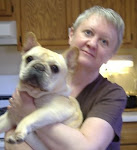


“HI, MY NAME IS JEAN, AND I’M A FOOD ADDICT.”
Now you all chime in with, “Hi, Jean!” (And skip the hi jean/hygiene joke, okay? cause I’ve already heard it 30 billion times.)
I was active in Overeaters Anonymous (OA) and Food Addicts Anonymous (FAA) for several years in the 1990’s, when I lived in a part of Massachusetts that had plenty of meetings to choose from. Getting to an OA or FAA meeting where I live now is tough. I live in a small-town Christian community that for the most part views 12-step programs and the people involved in them as the the devil’s spawn. Many of my neighbors here see addiction as a moral failing, not a disease, and only one church in town allows 12-step meetings on their premises.
I fell away from the OA & FAA programs for a variety of reasons, one of which was that taking the first of the 12 steps required me to admit that I am powerless over food and (as I understood my sponsor to say) always would be. I just could not wrap my mind around that at the time. I was convinced that I had been born a normal eater and that my upbringing and life events had turned me into an overeater. I was convinced that somehow I could be restored to the normal eater I was when I was born. I spent years in therapy, consulted with an eating disorder specialist and a nutritionist and gained a lot of insights about myself. I also gained another 60 pounds, had weight loss surgery, and even after losing all my excess weight (90 pounds) I found myself still struggling with food.
So once again, I’m back where I started. Life does tend to take us in circular journeys that (if we pay attention to the lessons we need to learn) eventually moves us up away from our old troubles in sort of spiral fashion. If I could attend an OA or FAA meeting tonight, I’d be right there on a folding chair in a church hall with the smell of coffee (but no cigarettes, nowadays), and when it was my turn, I’d be saying again, “Hi, my name is Jean, and I’m a food addict.”
Tuesday, March 22, 2011

Monday, March 21, 2011
A New Way to Think About Exercise
Before my exercise class last Friday morning, Caroline Duncan called me into her office, shut the door (triggering the automatic “bad news is coming” fear reaction!), and read aloud today’s feature article, The Elegance of Exercise. I was blown away, and not out of relief that I hadn’t been reprimanded or dismissed. I was blown away by the brilliance of the article. After zipping around in the mental stratosphere for a while, I grabbed onto the flimsy string that anchors me to earth and settled down to do some serious thinking about what Caroline had said in her own elegant fashion. I’ll try not to steal her thunder and I’ll let you draw your own conclusions about her ideas, but before you read her article, I want to tell you this.
I’m one of the people she mentions in the first paragraph, the ones who moan and groan at the very thought of exercise. About seven months after my band surgery, I somehow felt compelled to increase and diversify my exercise, which until then I had been doing out of dreary obligation to my surgeon, who had made me promise to exercise at least 30 minutes a day. I was exercising out of duty, the way my mom swallowed castor oil as a child – because it was good for me and an authority figure (in Mom’s case, her loving tyrant of a mother) insisted that I do it. A few months later, I was amazed to find myself disappointed one day when I had to skip an aerobics class in order to keep a band fill appointment. Wouldn’t you be amazed at that, too? For a bandster, a fill is of such primary importance that everything else pales by comparison. I got my fill that day but I sorely missed my exercise class.
I tell you this because if you’re one of the moaners and groaners, I don’t want you to skip reading Caroline’s article. It’s not just another “do it because it’s good for you” lecture. It speaks to a very basic truth: weight loss surgery helps you lose weight, but you’re going to need more than weight loss to improve your health, appearance and quality of life. Those missing components don’t come in a bottle. They don’t fly like magic out of a plastic surgeon’s scalpel. They don’t come from an exercise expert, be it Jillian Michaels or the far-superior Caroline Duncan. They come from you and the work you do to help yourself. As a kid, I used to beg my mother for notes excusing me from gym class (which she refused to write even though she hated gym class too). Well, listen up, folks. We’ll be accepting NO MORE EXERCISE EXCUSES from this day forward!
The Elegance of Exercise
Caroline Duncan, BSc, CFI, CPFT
ADBC INC. Fitness Studio, Troy, TN
Most people tend to think of exercise as an activity they know they should be doing, yet most will verify they have little time to exercise. Just the thought of exercising brings agony, groans, and complaining. If we could package exercise in a bottle, market it, and sell it with a guarantee of magic benefits such as lower cholesterol, blood pressure, blood glucose; improved sleep, stronger bones, cancer prevention, more energy; and a more youthful image and physique, we would all be wealthy. Instead, exercise is all about personal participation to gain those benefits.
Smart exercising encompasses a diverse array of fitness components such as cardiovascular endurance, muscular endurance, muscular strength, agility, and flexibility. Cardio exercising improves the cardiovascular system, strength conditioning tones and tightens the assets – both physical and spiritual, agility improves balance, and flexibility helps to elongate and make the musculoskeletal system more responsive and pliable. Without these diverse fitness components, what good does it do to involve one component without the other? These components create the balance the body needs just for daily living activities and benefit the body enormously for body functioning. By incorporating these components, exercise bathes the body with a sense of equilibrium, strength, and elegance. Simply put, the human body was meant to move.
Meaningful, smart exercise and nutrition can result in a new body transformation without intrusive scars. By incorporating exercise in one’s daily menu, it truly staves off the ageing process. Where on earth can one get a toned body that possesses more energy and a more youthful physique than from what exercise and nutrition can produce? While surgery does benefit some individuals, others continue the yo-yo cycle of weight loss and weight gain. The yo-yo cycle has negative impact on the human body. Quit kidding yourself! People that depend on a strict diet without exercise activity need to be aware that the skin quickly loses its elasticity, has greater collagen breakdown, and muscle atrophy takes on a different form, almost like that of excess flab waving in the wind. In fact, Professor Stuart Warden, Director of Physical Therapy Research at Indiana University, informed the New York Times last week that “the stresses of exercise activate a particular molecular pathway that increases collagen,” which leads to stronger connective tissues in the dermis, and thus, fewer wrinkles and younger-looking skin. With the combination of diverse exercise and good nutrition, the body responds and creates a beautiful body – all built from the brilliance and elegance of exercising.
So, get off your duff, put your best foot forward, and do something that incorporates all the fitness components and smarter nutrition. Your heart will get stronger, your muscles will become more toned, your skin will thank you, and above all your body will be more responsive with energy.
Jean comments:
I’m not accustomed to thinking of exercise and elegance in the same thought bubble. In fact, I often feel the opposite of elegant when I’m exercising. I’m hot, damp and panting; I have a severe case of bed head and a sweat-soaked headband a la Bruce Springsteen; I’m usually wearing an outfit I wouldn’t otherwise be caught dead in, I’m wearing clunky athletic shoes; and I’m stepping on my left foot when everyone else is stepping on their right foot while my internal audience screams, “No, no, Jean! Not that right foot, the other right foot!” Not much elegance in any of that, is there?
Or maybe there is.
Webster’s New World Dictionary defines “elegant” thusly:
(1) having dignified richness and grace, as of manner, design, dress, etc. (I call this the Grace Kelly definition.)
(2) cleverly apt and simple, as in “an elegant solution.” (I call this the Friedrich Hansen definition, for the reason you’ll see below.)
As I think Caroline’s article demonstrates, exercising your body encompasses both definitions of elegant. When I was in my teens and understood only the Grace Kelly definition of elegant, I overheard my father (an inventor) discussing a problem with his business partner, a German scientist named Friedrich, about their project using microwaves to find impurities (like oil) in the earth (many years later, my mother complained bitterly, “Why couldn’t they have been the ones to figure out you can cook with microwaves?”).
Although I often typed patent applications for Dad and Uncle Fred (as we called Friedrich), I understood perhaps one word out of 20 that they spoke. Eventually they worked their way through this particular problem, and I was startled to hear Fred exclaim, “An elegant solution, Edward! Elegant!” The two men, both of them about as elegant in appearance as Albert Einstein having a bad hair day about a week after he should have done some laundry, were tickled pink with their solution because of its mind-boggling cleverness and wondrous simplicity.
Still not getting it? Let’s look at an example that’s more likely to happen in your own everyday life. Let’s say you’re a manager with four employees who, all working together, need five days to accomplish an extremely important task. The job gets done every week, but at the dollar cost of 200 man-hours (or woman-hours) and the business cost of two other departments who can’t do their job until yours is done, plus the frustration all this expense and delay causes not only the Big Boss but the Big Client #1 who’s impatiently waiting for his/her widget to arrive at his desk or receiving dock so that all his own employees can get to work making their own clients happy. After thinking about all this for a while, you realize that if your team uses a different technique or procedure or material or machine, the job can be done by only two employees, in two days instead of five. Now the other two employees are available to spend two days doing a similar task for Big Client #2. As a result of your bright idea, the organization cuts its operating costs, improves its product and customer service, and makes it possible to bring in new clients and therefore more income, while everyone gets to take Friday off. That, my dear Watson, is an elegant solution.
Now let’s apply the word elegance to the human body. Are you thinking something like, “I’m fat and 50, what’s elegant about that?” Please dismiss that thought. You don’t have to be a human who looks like Grace Kelly. If I were a professor of medicine (which sadly, I am not), I could prove to you that your body is in fact very rich and graceful in its manner, design, and problem-solving abilities. I’m Miss Jean, not Dr. Jean, so let’s not try to decipher something as complicated as the nervous system. Let’s just think about the miracle of autonomous breathing. It is a simple enough function – breathe in, breathe out, breathe in, breathe out – that you probably take for granted unless you suffer from something like asthma or COPD. Your breathing brings in the oxygen you must have to stay alive, and it works in a graceful, rhythmic, continuous fashion so efficient that it doesn’t require any conscious effort on your part. If we say that the problem is that you’ll die without enough oxygen, your rich and complex body has solved that problem in a wonderfully elegant way.
Finally, let’s think about elegance as applied to exercise. In exercise class last Friday, I panted and sweated and thought for a moment that I would have to stop and rest and that I would never figure out how to avoiding stepping with my left foot when I was supposed to be stepping with my right foot. But my pride wouldn’t let me stop, so I admonished myself (“Stop thinking about it and just do it!”) and carried on, and a few seconds later this short, sweaty, droopy, myopic 57-year-old body of mine suddenly got it. My mind, my lungs, my heart, my feet and the music all came into alignment – a very elegant alignment indeed. In that moment, I felt like Superwoman – that I could do anything, any physical or mental task that a situation demanded, and that I could do it well.
That kind of alignment – the sense of equilibrium, strength, and elegance that Caroline describes in her article – really does seem superhuman to me. But it isn’t superhuman. The potential for it in inside every single cell in your body, because as Caroline said, your human body was meant to move. God, or evolution, or your Higher Power, designed it that way for a reason. Movement is essential to almost everything good and worthwhile to which you might aspire. Of course a paralyzed or disabled person can accomplish good and worthwhile things…with help from someone able-bodied like you. And (to me, anyway) the best way to teach your body to obey your commands and take you wherever you want to go is through daily exercise and purposeful movement. Yes, a ballerina performing a pirouette is beautiful and elegant, but you don’t need a swan neck, long legs, and a pink tutu to achieve beauty and elegance. Walking to the mailbox is also beautiful and elegant, especially if that was once a task too enormous to even contemplate.
If you’re like me, you’ve spent years thinking of yourself as fat and unattractive, graceless and clumsy, inept and unmotivated. You wished for a magic potion like the one Caroline describes in her article. You may have hoped that bariatric surgery could substitute for that potion. In truth, you’re already equipped with everything you need to live a useful, satisfying, healthy and even joyful life. It’s your birthright: you were born with it. And now’s the time to train yourself to use it.
I’m one of the people she mentions in the first paragraph, the ones who moan and groan at the very thought of exercise. About seven months after my band surgery, I somehow felt compelled to increase and diversify my exercise, which until then I had been doing out of dreary obligation to my surgeon, who had made me promise to exercise at least 30 minutes a day. I was exercising out of duty, the way my mom swallowed castor oil as a child – because it was good for me and an authority figure (in Mom’s case, her loving tyrant of a mother) insisted that I do it. A few months later, I was amazed to find myself disappointed one day when I had to skip an aerobics class in order to keep a band fill appointment. Wouldn’t you be amazed at that, too? For a bandster, a fill is of such primary importance that everything else pales by comparison. I got my fill that day but I sorely missed my exercise class.
I tell you this because if you’re one of the moaners and groaners, I don’t want you to skip reading Caroline’s article. It’s not just another “do it because it’s good for you” lecture. It speaks to a very basic truth: weight loss surgery helps you lose weight, but you’re going to need more than weight loss to improve your health, appearance and quality of life. Those missing components don’t come in a bottle. They don’t fly like magic out of a plastic surgeon’s scalpel. They don’t come from an exercise expert, be it Jillian Michaels or the far-superior Caroline Duncan. They come from you and the work you do to help yourself. As a kid, I used to beg my mother for notes excusing me from gym class (which she refused to write even though she hated gym class too). Well, listen up, folks. We’ll be accepting NO MORE EXERCISE EXCUSES from this day forward!
The Elegance of Exercise
Caroline Duncan, BSc, CFI, CPFT
ADBC INC. Fitness Studio, Troy, TN
Most people tend to think of exercise as an activity they know they should be doing, yet most will verify they have little time to exercise. Just the thought of exercising brings agony, groans, and complaining. If we could package exercise in a bottle, market it, and sell it with a guarantee of magic benefits such as lower cholesterol, blood pressure, blood glucose; improved sleep, stronger bones, cancer prevention, more energy; and a more youthful image and physique, we would all be wealthy. Instead, exercise is all about personal participation to gain those benefits.
Smart exercising encompasses a diverse array of fitness components such as cardiovascular endurance, muscular endurance, muscular strength, agility, and flexibility. Cardio exercising improves the cardiovascular system, strength conditioning tones and tightens the assets – both physical and spiritual, agility improves balance, and flexibility helps to elongate and make the musculoskeletal system more responsive and pliable. Without these diverse fitness components, what good does it do to involve one component without the other? These components create the balance the body needs just for daily living activities and benefit the body enormously for body functioning. By incorporating these components, exercise bathes the body with a sense of equilibrium, strength, and elegance. Simply put, the human body was meant to move.
Meaningful, smart exercise and nutrition can result in a new body transformation without intrusive scars. By incorporating exercise in one’s daily menu, it truly staves off the ageing process. Where on earth can one get a toned body that possesses more energy and a more youthful physique than from what exercise and nutrition can produce? While surgery does benefit some individuals, others continue the yo-yo cycle of weight loss and weight gain. The yo-yo cycle has negative impact on the human body. Quit kidding yourself! People that depend on a strict diet without exercise activity need to be aware that the skin quickly loses its elasticity, has greater collagen breakdown, and muscle atrophy takes on a different form, almost like that of excess flab waving in the wind. In fact, Professor Stuart Warden, Director of Physical Therapy Research at Indiana University, informed the New York Times last week that “the stresses of exercise activate a particular molecular pathway that increases collagen,” which leads to stronger connective tissues in the dermis, and thus, fewer wrinkles and younger-looking skin. With the combination of diverse exercise and good nutrition, the body responds and creates a beautiful body – all built from the brilliance and elegance of exercising.
So, get off your duff, put your best foot forward, and do something that incorporates all the fitness components and smarter nutrition. Your heart will get stronger, your muscles will become more toned, your skin will thank you, and above all your body will be more responsive with energy.
Jean comments:
I’m not accustomed to thinking of exercise and elegance in the same thought bubble. In fact, I often feel the opposite of elegant when I’m exercising. I’m hot, damp and panting; I have a severe case of bed head and a sweat-soaked headband a la Bruce Springsteen; I’m usually wearing an outfit I wouldn’t otherwise be caught dead in, I’m wearing clunky athletic shoes; and I’m stepping on my left foot when everyone else is stepping on their right foot while my internal audience screams, “No, no, Jean! Not that right foot, the other right foot!” Not much elegance in any of that, is there?
Or maybe there is.
Webster’s New World Dictionary defines “elegant” thusly:
(1) having dignified richness and grace, as of manner, design, dress, etc. (I call this the Grace Kelly definition.)
(2) cleverly apt and simple, as in “an elegant solution.” (I call this the Friedrich Hansen definition, for the reason you’ll see below.)
As I think Caroline’s article demonstrates, exercising your body encompasses both definitions of elegant. When I was in my teens and understood only the Grace Kelly definition of elegant, I overheard my father (an inventor) discussing a problem with his business partner, a German scientist named Friedrich, about their project using microwaves to find impurities (like oil) in the earth (many years later, my mother complained bitterly, “Why couldn’t they have been the ones to figure out you can cook with microwaves?”).
Although I often typed patent applications for Dad and Uncle Fred (as we called Friedrich), I understood perhaps one word out of 20 that they spoke. Eventually they worked their way through this particular problem, and I was startled to hear Fred exclaim, “An elegant solution, Edward! Elegant!” The two men, both of them about as elegant in appearance as Albert Einstein having a bad hair day about a week after he should have done some laundry, were tickled pink with their solution because of its mind-boggling cleverness and wondrous simplicity.
Still not getting it? Let’s look at an example that’s more likely to happen in your own everyday life. Let’s say you’re a manager with four employees who, all working together, need five days to accomplish an extremely important task. The job gets done every week, but at the dollar cost of 200 man-hours (or woman-hours) and the business cost of two other departments who can’t do their job until yours is done, plus the frustration all this expense and delay causes not only the Big Boss but the Big Client #1 who’s impatiently waiting for his/her widget to arrive at his desk or receiving dock so that all his own employees can get to work making their own clients happy. After thinking about all this for a while, you realize that if your team uses a different technique or procedure or material or machine, the job can be done by only two employees, in two days instead of five. Now the other two employees are available to spend two days doing a similar task for Big Client #2. As a result of your bright idea, the organization cuts its operating costs, improves its product and customer service, and makes it possible to bring in new clients and therefore more income, while everyone gets to take Friday off. That, my dear Watson, is an elegant solution.
Now let’s apply the word elegance to the human body. Are you thinking something like, “I’m fat and 50, what’s elegant about that?” Please dismiss that thought. You don’t have to be a human who looks like Grace Kelly. If I were a professor of medicine (which sadly, I am not), I could prove to you that your body is in fact very rich and graceful in its manner, design, and problem-solving abilities. I’m Miss Jean, not Dr. Jean, so let’s not try to decipher something as complicated as the nervous system. Let’s just think about the miracle of autonomous breathing. It is a simple enough function – breathe in, breathe out, breathe in, breathe out – that you probably take for granted unless you suffer from something like asthma or COPD. Your breathing brings in the oxygen you must have to stay alive, and it works in a graceful, rhythmic, continuous fashion so efficient that it doesn’t require any conscious effort on your part. If we say that the problem is that you’ll die without enough oxygen, your rich and complex body has solved that problem in a wonderfully elegant way.
Finally, let’s think about elegance as applied to exercise. In exercise class last Friday, I panted and sweated and thought for a moment that I would have to stop and rest and that I would never figure out how to avoiding stepping with my left foot when I was supposed to be stepping with my right foot. But my pride wouldn’t let me stop, so I admonished myself (“Stop thinking about it and just do it!”) and carried on, and a few seconds later this short, sweaty, droopy, myopic 57-year-old body of mine suddenly got it. My mind, my lungs, my heart, my feet and the music all came into alignment – a very elegant alignment indeed. In that moment, I felt like Superwoman – that I could do anything, any physical or mental task that a situation demanded, and that I could do it well.
That kind of alignment – the sense of equilibrium, strength, and elegance that Caroline describes in her article – really does seem superhuman to me. But it isn’t superhuman. The potential for it in inside every single cell in your body, because as Caroline said, your human body was meant to move. God, or evolution, or your Higher Power, designed it that way for a reason. Movement is essential to almost everything good and worthwhile to which you might aspire. Of course a paralyzed or disabled person can accomplish good and worthwhile things…with help from someone able-bodied like you. And (to me, anyway) the best way to teach your body to obey your commands and take you wherever you want to go is through daily exercise and purposeful movement. Yes, a ballerina performing a pirouette is beautiful and elegant, but you don’t need a swan neck, long legs, and a pink tutu to achieve beauty and elegance. Walking to the mailbox is also beautiful and elegant, especially if that was once a task too enormous to even contemplate.
If you’re like me, you’ve spent years thinking of yourself as fat and unattractive, graceless and clumsy, inept and unmotivated. You wished for a magic potion like the one Caroline describes in her article. You may have hoped that bariatric surgery could substitute for that potion. In truth, you’re already equipped with everything you need to live a useful, satisfying, healthy and even joyful life. It’s your birthright: you were born with it. And now’s the time to train yourself to use it.
Sunday, March 13, 2011
Zumba Style!
This isn't a great photo, but it does show these cool Zumba style sashes covered with jingly spangles that make noise when you shake your booty. Exercise class is much more fun when it involves costumes and noise-making!

Friday, February 25, 2011
Breast Reduction Surgery

I had a breast reduction about six months before my band surgery. My motivation for that surgery was complicated. I had chronic back pain which my chiropractor admitted could be related to my oversized breasts. And although I had once been proud of my breasts (big tits rather than a pretty face being my claim to fame) I had come to hate them. They hung down to my waist and I blamed them for my stooped, matronly appearance. I truly believed that if they were smaller and perkier, the rest of my body would look better too. Intellectually I knew I was too big all over my body, but emotionally I pinned the blame on my breasts. Aside from attracting the attention of unsuitable men, they had never done me any favors. I hadn't even nursed a baby. The aureole of the nipple on my left breast was grotesquely large - about 4" in diameter, and odd shaped, while the right one was disproportionately small. They were both badly scarred from vicious scratch injuries I had inflicted on myself during a particularly difficult phase of recovering from sexual abuse. When I had my first mammogram at age 40, the technician took one look at me, went to the door, and called down the hallway (which was open to the mammography waiting area) to her coworker, "Hey, Sharon, I'm gonna need the big plates for this one!"
So I was delighted to have that breast reduction even though my insurance company dictated how much tissue had to be removed from each breast and the recovery was slow and painful. I had been anesthetized so long for that procedure that I felt as if I'd been beaten with a baseball bat after being hit by a truck. I was kept in the hospital overnight but when I was discharged late the next morning, I felt as if I'd only just woken up in the recovery room. I had lateral incisions (about 12") each running from under my arms to the center of my chest, vertical incisioins running from the lateral ones up to my new (small) nipples, and circular incisions around the nipples. A true Bride-of-Frankenstein look. Some sections of the incisions just refused to heal, gaping open so that I had to pack themwith sterile gel and gauze every day. The incisions oozed and stained my clothing because I had a hard time keeping up with changing the bandages so often. Simple movements like reaching for something in a kitchen cabinet or turning over in bed were difficult. I toughed it out - after all, this was all my idea in the first place. The incisions finally healed, the bruises faded, the swelling subsided, and I was left with ridiculously small breasts on on obese body. Have you ever tried to find a 48A bra?
Before the breast reduction, my plastic surgeon said to me in a carefully offhand tone, "Are you planning to lose any weight in the future?" Talk about a loaded question. I mumbled something about wishing I could lose weight but not expecting to succeed. He warned me that if I did lose weight after the reduction, I might not be happy with the "aesthetic" result, especially in the area of the lateral incisions. Turns out he was right. After losing my excess weight, the skin under my arms drapes weirdly over those incisions. Fortunately it's not something that's obvious to others, and even I don't see it unless I lift my arms away from my torso.
Despite all of that (and I scared thoughts of breast surgery right out of you, so be it), I'm glad I had the breast reduction. Those small breasts don't look so ludicrous with my smaller body. In fact, they look just right to me. I wear a 38B bra now, which is a bit easier to find than the 48A. My girls are drooping a bit - not quite as perky as they were 2-1/2 years ago, but as I tell my bra customers every day, "Gravity gets the better of us sooner or later." Interestingly, I've talked to many customers who've had breast reductions that resulted in smaller breasts than they'd like, but every one of them syas she doesn't regret the surgery. Like me, these ladies think it's wonderful to wear buttoned blouses that don't gape open and form-fitting sweaters that don't make them look like a Dolly Parton Wannabe. They like not having to buy a bigger size dress just to be able to fit it over their bosom while the neckline slips off their shoulders and a family of Munchkins can camp under the skirt.
So I was delighted to have that breast reduction even though my insurance company dictated how much tissue had to be removed from each breast and the recovery was slow and painful. I had been anesthetized so long for that procedure that I felt as if I'd been beaten with a baseball bat after being hit by a truck. I was kept in the hospital overnight but when I was discharged late the next morning, I felt as if I'd only just woken up in the recovery room. I had lateral incisions (about 12") each running from under my arms to the center of my chest, vertical incisioins running from the lateral ones up to my new (small) nipples, and circular incisions around the nipples. A true Bride-of-Frankenstein look. Some sections of the incisions just refused to heal, gaping open so that I had to pack themwith sterile gel and gauze every day. The incisions oozed and stained my clothing because I had a hard time keeping up with changing the bandages so often. Simple movements like reaching for something in a kitchen cabinet or turning over in bed were difficult. I toughed it out - after all, this was all my idea in the first place. The incisions finally healed, the bruises faded, the swelling subsided, and I was left with ridiculously small breasts on on obese body. Have you ever tried to find a 48A bra?
Before the breast reduction, my plastic surgeon said to me in a carefully offhand tone, "Are you planning to lose any weight in the future?" Talk about a loaded question. I mumbled something about wishing I could lose weight but not expecting to succeed. He warned me that if I did lose weight after the reduction, I might not be happy with the "aesthetic" result, especially in the area of the lateral incisions. Turns out he was right. After losing my excess weight, the skin under my arms drapes weirdly over those incisions. Fortunately it's not something that's obvious to others, and even I don't see it unless I lift my arms away from my torso.
Despite all of that (and I scared thoughts of breast surgery right out of you, so be it), I'm glad I had the breast reduction. Those small breasts don't look so ludicrous with my smaller body. In fact, they look just right to me. I wear a 38B bra now, which is a bit easier to find than the 48A. My girls are drooping a bit - not quite as perky as they were 2-1/2 years ago, but as I tell my bra customers every day, "Gravity gets the better of us sooner or later." Interestingly, I've talked to many customers who've had breast reductions that resulted in smaller breasts than they'd like, but every one of them syas she doesn't regret the surgery. Like me, these ladies think it's wonderful to wear buttoned blouses that don't gape open and form-fitting sweaters that don't make them look like a Dolly Parton Wannabe. They like not having to buy a bigger size dress just to be able to fit it over their bosom while the neckline slips off their shoulders and a family of Munchkins can camp under the skirt.
Tuesday, February 22, 2011
Does the Adjustable Gastric Band Really Work?

My friend Karrie has graciously provided these photos of her weight loss journey. She has lost 130 pounds in a year and is doing great. Oh, did I mention that she has an adjustable gastric band? Sure looks like it works for her!

Friday, February 18, 2011
The new puppy at 9 Dogs Howling
...is Babe, a Bassett Hound-Something mix. Not that that has anything to do with weight loss surgery. But check out my collar bones!

Monday, February 7, 2011
When things go wrong
I undertook my adjustable gastric band journey with a great deal of hope and commitment. For a while there, I was a perfect bandster. I did everything right and got to my goal weight in one year. But while I was strutting along with that big, shiny halo on my head, I tripped and fell, and things started to go wrong.
In June 2009, when I was 21 months post-op, my band slipped, probably because of my untreated hiatal hernia. My original surgeon had lost his medical license and no local doctors would touch me. I found a new surgeon 150 miles away and had all the fill taken out of my band. All my symptoms disappeared, but I had to wait 6 weeks to start fills again, and shed many tears. When I started getting fills, they were increasingly difficult and finally impossible without the help of my surgeon, the hospital radiology department, and $3000 of my insurance company's money.
At the start of the holiday shopping season in 2009, I learned that I would need surgery to fix my flipped port. I couldn't take time off for surgery until January. The day after Thanksgiving, my mother died. I shed more tears, and more tears. In January 2010, my mother-in-law began losing her battle with cancer and I had to postpone my port surgery. Then my surgeon postponed it. Then my mother-in-law died. Finally I had the repair surgery in April 2009. It was much harder and more painful than my original band surgery, probably because of all the scar tissue in there. In May I began getting fills again. In July I started feeling restriction again. Although I had regained almost 25 pounds, once my band started working again, I started losing weight again. Now I'm 2 pounds away from my lowest weight, and my story has a happy ending. For now.
And what did I learn from my experience? I learned (again) that I'm not perfect, my band's not perfect, and that I have to set aside fear and panic in order to concentrate on solving a big problem or a series of small ones. I learned that I must pay attention to and honor my body every day. I learned that exercising every day will keep me sane if not perfectly thin. I learned that I truly am in this for the long haul, that the Magic Kingdom was just one stop along the way to my story's end. And the absolutely most important, most crucial lesson I learned was to ask others for help. Not just doctors but friends, family, fellow churchgoers, coworkers, and acquaintances (not necessarily all at once, though).
At work the other day, I had an encounter with one of my favorite elderly customers, a 92-yr-old woman with limited communication skills (I think because of a stroke). She is beautiful to me, with an angelic smile, and I want to just scoop her up and put her in my pocket (I have two big pockets in my bra fitter apron, and she might just fit). After we talked (with her daughter's translation assistance) and my customer walked away, I turned to my coworker and friend, Alicia. I was so overcome with grief at losing my own mother that I burst into tears. Alicia gave me a hug and comforted me, and I survived that bout of sadness and loss. There was a time in my life when I would have just dashed into the ladies' room to suffer alone. Now I have lost my mother but I have gained a friend, Alicia, who understands how hurt and lost I feel and wants me to feel better.
Similarly, I have lost a lot of other things since I was banded. I lost weight and inches, and some really dumb ideas about myself, and a closet full of jumbo sized clothes. I lost a job (that's another story) and I lost my mother. When my band slipped, I lost some of my enthusiasm and confidence in myself as a bandster. I lost my conviction that I already know everything I need to know (really,I should have given that idea up the first time it came to me, when I was 13 years old). But at the same time I have gained some knowledge, some wisdom, and some wonderful friends. Close by, I have Alicia. Far away, I have Lisa, and Nina, and Willa, and Christina. I still have my husband and far too many pets. I'm still alive. And I'm still on the bandwagon. Sometimes I have to get off and push the dang thing for a while, and sometimes I can just relax and watch the scenery go by.
In June 2009, when I was 21 months post-op, my band slipped, probably because of my untreated hiatal hernia. My original surgeon had lost his medical license and no local doctors would touch me. I found a new surgeon 150 miles away and had all the fill taken out of my band. All my symptoms disappeared, but I had to wait 6 weeks to start fills again, and shed many tears. When I started getting fills, they were increasingly difficult and finally impossible without the help of my surgeon, the hospital radiology department, and $3000 of my insurance company's money.
At the start of the holiday shopping season in 2009, I learned that I would need surgery to fix my flipped port. I couldn't take time off for surgery until January. The day after Thanksgiving, my mother died. I shed more tears, and more tears. In January 2010, my mother-in-law began losing her battle with cancer and I had to postpone my port surgery. Then my surgeon postponed it. Then my mother-in-law died. Finally I had the repair surgery in April 2009. It was much harder and more painful than my original band surgery, probably because of all the scar tissue in there. In May I began getting fills again. In July I started feeling restriction again. Although I had regained almost 25 pounds, once my band started working again, I started losing weight again. Now I'm 2 pounds away from my lowest weight, and my story has a happy ending. For now.
And what did I learn from my experience? I learned (again) that I'm not perfect, my band's not perfect, and that I have to set aside fear and panic in order to concentrate on solving a big problem or a series of small ones. I learned that I must pay attention to and honor my body every day. I learned that exercising every day will keep me sane if not perfectly thin. I learned that I truly am in this for the long haul, that the Magic Kingdom was just one stop along the way to my story's end. And the absolutely most important, most crucial lesson I learned was to ask others for help. Not just doctors but friends, family, fellow churchgoers, coworkers, and acquaintances (not necessarily all at once, though).
At work the other day, I had an encounter with one of my favorite elderly customers, a 92-yr-old woman with limited communication skills (I think because of a stroke). She is beautiful to me, with an angelic smile, and I want to just scoop her up and put her in my pocket (I have two big pockets in my bra fitter apron, and she might just fit). After we talked (with her daughter's translation assistance) and my customer walked away, I turned to my coworker and friend, Alicia. I was so overcome with grief at losing my own mother that I burst into tears. Alicia gave me a hug and comforted me, and I survived that bout of sadness and loss. There was a time in my life when I would have just dashed into the ladies' room to suffer alone. Now I have lost my mother but I have gained a friend, Alicia, who understands how hurt and lost I feel and wants me to feel better.
Similarly, I have lost a lot of other things since I was banded. I lost weight and inches, and some really dumb ideas about myself, and a closet full of jumbo sized clothes. I lost a job (that's another story) and I lost my mother. When my band slipped, I lost some of my enthusiasm and confidence in myself as a bandster. I lost my conviction that I already know everything I need to know (really,I should have given that idea up the first time it came to me, when I was 13 years old). But at the same time I have gained some knowledge, some wisdom, and some wonderful friends. Close by, I have Alicia. Far away, I have Lisa, and Nina, and Willa, and Christina. I still have my husband and far too many pets. I'm still alive. And I'm still on the bandwagon. Sometimes I have to get off and push the dang thing for a while, and sometimes I can just relax and watch the scenery go by.
Subscribe to:
Posts (Atom)