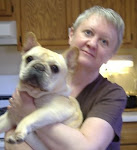
My journey on the bandwagon has taken an unexpected detour. Earlier this year, I learned that the reflux I'd been having was related to esophageal dilation and motility problems. A complete unfill cured the dilation, but because my surgeon will not re-fill my band and strongly recommends removing it, I'm having surgery to remove my band and revise to vertical sleeve gastrectomy on April 27, 2012. I am very sad to say goodbye to my band, but trying to make the best of the circumstances. I absolutely refuse to go back to the land of obesity, and I know myself well enough to realize that I still need a surgical tool to help me with weight management.
I have a lot to learn about the sleeve and you'll probably see me comparing life with the sleeve to life with the band. I'll always be a bandster at heart, and the Bandwagon publications and Facebook support group will go on as before. So stay tuned!
Wednesday, April 25, 2012
Thursday, December 29, 2011
Is there a link between obesity & fibromyalgia?
In 2009 and 2010, researchers published the findings of three studies performed at the University of Utah and the Norwegian University of Science and Technology that found a link between obesity and fibromyalgia. As someone recovering from obesity and suffering from fibromyalgia, I’m glad when data comes to light that might help explain, treat, or prevent these conditions. A link that might reveal a common cause sounded promising to me.
The public in general and FM sufferers in particular heard something else in those reports, thanks to eager journalists who jumped on the studies’ findings and mined them for their shiniest nuggets. The studies included mostly female subjects, so a distorted message was broadcast: FM is a fat woman’s disease, and if those lazy gals would just exert enough willpower to diet, exercise, and lose weight, their FM symptoms would lessen or even disappear.
I recently wrote an article about the obesity-fibro link for Fibromyalgia & Chronic Pain LIFE magazine. In researching the article, I learned a lot about the possible causes of both obesity and fibromyalgia, things I’d never heard before at all. Sufferers of both obesity and/or fibromyalgia often hear that their problem is all in their minds, but it turns out there’s a whole lot more going on than the patient’s conscious behavior…that the problem is caused or at least affected by biological and other factors over which we have no conscious control. If you’d like to read more about it, go to http://fmcpaware.org/ and click on the image of the magazine cover on the left side of the page (it’s a woman wearing a red jacket, holding a globe).
The public in general and FM sufferers in particular heard something else in those reports, thanks to eager journalists who jumped on the studies’ findings and mined them for their shiniest nuggets. The studies included mostly female subjects, so a distorted message was broadcast: FM is a fat woman’s disease, and if those lazy gals would just exert enough willpower to diet, exercise, and lose weight, their FM symptoms would lessen or even disappear.
I recently wrote an article about the obesity-fibro link for Fibromyalgia & Chronic Pain LIFE magazine. In researching the article, I learned a lot about the possible causes of both obesity and fibromyalgia, things I’d never heard before at all. Sufferers of both obesity and/or fibromyalgia often hear that their problem is all in their minds, but it turns out there’s a whole lot more going on than the patient’s conscious behavior…that the problem is caused or at least affected by biological and other factors over which we have no conscious control. If you’d like to read more about it, go to http://fmcpaware.org/ and click on the image of the magazine cover on the left side of the page (it’s a woman wearing a red jacket, holding a globe).
Tuesday, November 15, 2011
The late bloomer
In early November, one of our rose bushes decided to produce one last perfect rosebud before nodding off into its long winter sleep. You couldn’t miss that rose: a bright coral spot in the otherwise dull brown and grey garden remnants. I cut the rose, brought it inside, and put it in a bud vase on the counter of the bathroom I use the most, so I could enjoy it every time I went into the room (which, with my small capacity bladder, is at least 500 times a day). I positioned the vase so that the rose would be looking at me whenever I entered the room. Later that day, I went off to work and forgot about the rose until I came home six hours later.
Of course I saw the rose as soon as I walked into the bathroom, but it wasn’t facing me as I had left it. It had turned its lovely head towards the mirror, so it could admire itself. I could swear I heard the rose talking to its reflection. This is what it said:
“Oh my! Aren’t you a lovely girl? I’ve never before seen such a pretty face, and your color! You are just stunning! And I can tell that you are beautiful through and through; I can see your soul shining in those coral petals; I can see your spirit supporting that slender stem, and just a few thorns to remind everyone that you deserve respect. It’s a delight to meet you. I hope you won’t mind if I stare at you a while and drink in your loveliness. Is that okay with you? Oh, good. You are as kind as you are beautiful.”
Clearly, self-esteem was not an issue for that girl.
And why would it be, you ask? She’s a rose…to paraphrase the Bible, she toils not, nor does she spin. In fact, she’s awfully self-centered, mooning over her reflection in Jean’s bathroom mirror. She’s not like me – she’s young and fresh and perfect, while I am old and tired and wrinkled and fat.
That’s an easy conclusion to make, but it’s not correct. You have judged both the rose and yourself wrongly, and here’s why.
Rose was a late bloomer. While she worked for weeks to grow from a glimmer in God’s eye into a tight little bud, while her bigger, showier sisters burst into bloom and, being incorrigible show-offs, made sure to taunt little Rose. They called her names: immature, ignorant, slow, stupid…well, I’m sure you can imagine how that went. But Rose persisted. She was determined to bloom before the first frost, to prove her sisters wrong. She knew it would be slow and difficult, but it was her last chance. The brevity of a rose’s life was obvious to her as her older sisters shed their limp, brown-edged petals and dried into sad, hard rose hips. It would have been wonderful to prove them wrong before they died, but Rose knew she must fulfill her fate whether or not she had an audience. She was going to be a glorious rose just for herself.
And she did become a glorious rose. She achieved her goal, brightened my life and even as her life expectancy shrank from weeks to days to hours, she gazed in the mirror and said, “Oh my! Aren’t you a lovely girl?”
Thanksgiving Dinner "Full"
The Thanksgiving theme is especially appropriate subject matter for this newsletter, not just because of the practice of giving thanks but because of the ritual overfeeding of Thanksgiving celebrants. It is an excellent allegory for the concept of satiety, in ways both physical and spiritual.
I often say that my pre-op idea of satiety was “Thanksgiving Dinner Full”. Because I loved food and the experience of eating (the physical aspects) and because I was trying to fill a bottomless hole inside me (the spiritual aspect), every meal consisted of huge portions with second and third helpings – so much food that I was over stuffed. I would have to stop eating not because I was satisfied but because I was so uncomfortable. As soon as the pressure and bloating in my abdomen eased up, I was ready for more food, not because I was physically hungry (in the way I know it now) but because eating was my default activity. My mom used to say that cats’ default behavior was bathing: “When in doubt, take a bath”. Mine was: “When in doubt, eat.”
I think a lot of WLS patients have eaten that way as pre-ops and, like me, struggle to identify and accept their post-op experience of satiety. They say things like, “I never feel full,” when actually, feeling full is not a sign of satiety. Satiety is feeling that you have eaten enough food, no more, no less. Enough is not the amount that makes you happy. It’s the amount that ends your physical hunger pangs. It takes a long time to retrain your conscious mind to recognize satiety and heed it. If you don’t recognize it or don’t heed it, and go on overeating in your attempt to reach your pre-op “fullness”, your overeating can cause a lot of damage, not just to your weight loss but by dilating your esophagus and/or stomach and possibly by putting so much pressure on your band that it slips out of place.
That’s why I keep harping on the importance of weighing and measuring your food before you eat it. I know plenty of bandsters who have never done that, have lost their excess weight, and haven’t had any complications, so I can’t say that weighing and measuring is a guarantee of weight loss success and prevention of complications. But I do know that mindfulness during food preparation and at mealtime is crucial for teaching yourself a new way of eating. Your old way of eating is one of the things that made you so obese that you needed WLS, so it’s time to bid it farewell.
I often say that my pre-op idea of satiety was “Thanksgiving Dinner Full”. Because I loved food and the experience of eating (the physical aspects) and because I was trying to fill a bottomless hole inside me (the spiritual aspect), every meal consisted of huge portions with second and third helpings – so much food that I was over stuffed. I would have to stop eating not because I was satisfied but because I was so uncomfortable. As soon as the pressure and bloating in my abdomen eased up, I was ready for more food, not because I was physically hungry (in the way I know it now) but because eating was my default activity. My mom used to say that cats’ default behavior was bathing: “When in doubt, take a bath”. Mine was: “When in doubt, eat.”
I think a lot of WLS patients have eaten that way as pre-ops and, like me, struggle to identify and accept their post-op experience of satiety. They say things like, “I never feel full,” when actually, feeling full is not a sign of satiety. Satiety is feeling that you have eaten enough food, no more, no less. Enough is not the amount that makes you happy. It’s the amount that ends your physical hunger pangs. It takes a long time to retrain your conscious mind to recognize satiety and heed it. If you don’t recognize it or don’t heed it, and go on overeating in your attempt to reach your pre-op “fullness”, your overeating can cause a lot of damage, not just to your weight loss but by dilating your esophagus and/or stomach and possibly by putting so much pressure on your band that it slips out of place.
That’s why I keep harping on the importance of weighing and measuring your food before you eat it. I know plenty of bandsters who have never done that, have lost their excess weight, and haven’t had any complications, so I can’t say that weighing and measuring is a guarantee of weight loss success and prevention of complications. But I do know that mindfulness during food preparation and at mealtime is crucial for teaching yourself a new way of eating. Your old way of eating is one of the things that made you so obese that you needed WLS, so it’s time to bid it farewell.
Monday, October 31, 2011
I'm a Hollywood Star!
Sunday, September 25, 2011
My 4th Bandiversary Photo!
Sunday, August 28, 2011
The Big Decision
Deciding to have weight loss surgery, and choosing which procedure to have, is a big deal. The surgery has life-changing potential, and we want our decision about it to yield only the best results: at the very least, weight loss without complications. But like many things in life, the adjustable gastric band doesn’t come with a lifetime weight loss guarantee . That lack, and the fact that many insurance companies cover only one bariatric surgery procedure in a patient’s lifetime, puts even more pressure on us to make the right decision at the outset. Are there ways to make the decision-making clearer or easier beforehand, and/or to reduce the doubt, regret, or second-guessing after surgery?
The answer to that is maddeningly general: it all depends.
First of all, it depends on your unique personality. What type of decision-maker are you? Does your style change (and your anxiety escalate) depending on the nature of the decision? Choosing a $14.99 entrĂ©e from a restaurant menu usually doesn’t take as much time and energy as choosing a $14,999 surgical procedure.
Here’s what I mean by decision-making styles. I am a quick, sometimes impulsive decision maker who’d rather make a bad choice than no choice. My husband is a slow, cautious decision maker, one who must carefully consider and discuss every aspect of a situation before making his decision. What could be a potential conflict has turned out to be a useful balancing factor in our relationship. My husband’s cautious nature prevents me from leaping before I look, and my more adventurous nature prevents him from being permanently cemented to a bad patch of road.
Here's a list of common decision-making styles. Which category (or categories) do you fall into?
Agony – agonizing over a decision should perhaps be reserved for a very important decision but can be a waste of energy for less important decisions. Choosing a WLS procedure is important; choosing what to eat for breakfast on Tuesday is less important. I encounter a lot of people who fall into the agony category. They tend to do so much research, thinking, and analysis that they agonize themselves into paralysis. Taking a mini vacation from the decision can help neutralize the pain and paralysis this decision-maker feels, but be careful not to turn into a procrastinator (see below).
Impulsive – Like me, you go with your first or “gut” reaction.
Escapist – You avoid making a decision by creating a false choice. For example, you’re reluctant to decide about WLS, so you escape it by saying, “I’m going to lose weight on my own,” for the millionth time.
Compliant – You let someone else decide for you. Your surgeon says, “You should have RNY,” so you have RNY.
Playing it Safe – You choose the least risky option. Risk might be assessed in terms of surgical mortality (0% for the band) or out-of-pocket cost (you choose whichever procedure your insurance policy will cover).
Procrastinator– You delay your decision indefinitely, so it stays in the background of your life, like mental wallpaper. This might be a wise choice if you truly believe you don’t have enough information to make a good decision. Perhaps the VSG looks good to you, but it’s too new a procedure to have enough studies and data about success and complication rates published about it.
Fatalistic – You shrug and say,”What will be, will be.”
None of these styles are any better or worse than the other. I just want to reassure you (if you’re slow to decide, it’s perfectly okay) and also to encourage you to consider other approaches to the decision-making process. As impulsive a decision-maker as I can be, several times in my life I’ve faced some decisions (especially in business, where the decision involved millions of dollars of my employer’s money) that looked like Mount Everest. A few times, I was fortunate enough to work for a man who was willing to listen to me debate the issue and to ask me things like, “What if you look at it a different way?” His different approach sometimes helped me see a path I hadn’t noticed before, and other times helped me see that a path I’d already considered was actually the best one.
The answer to that is maddeningly general: it all depends.
First of all, it depends on your unique personality. What type of decision-maker are you? Does your style change (and your anxiety escalate) depending on the nature of the decision? Choosing a $14.99 entrĂ©e from a restaurant menu usually doesn’t take as much time and energy as choosing a $14,999 surgical procedure.
Here’s what I mean by decision-making styles. I am a quick, sometimes impulsive decision maker who’d rather make a bad choice than no choice. My husband is a slow, cautious decision maker, one who must carefully consider and discuss every aspect of a situation before making his decision. What could be a potential conflict has turned out to be a useful balancing factor in our relationship. My husband’s cautious nature prevents me from leaping before I look, and my more adventurous nature prevents him from being permanently cemented to a bad patch of road.
Here's a list of common decision-making styles. Which category (or categories) do you fall into?
Agony – agonizing over a decision should perhaps be reserved for a very important decision but can be a waste of energy for less important decisions. Choosing a WLS procedure is important; choosing what to eat for breakfast on Tuesday is less important. I encounter a lot of people who fall into the agony category. They tend to do so much research, thinking, and analysis that they agonize themselves into paralysis. Taking a mini vacation from the decision can help neutralize the pain and paralysis this decision-maker feels, but be careful not to turn into a procrastinator (see below).
Impulsive – Like me, you go with your first or “gut” reaction.
Escapist – You avoid making a decision by creating a false choice. For example, you’re reluctant to decide about WLS, so you escape it by saying, “I’m going to lose weight on my own,” for the millionth time.
Compliant – You let someone else decide for you. Your surgeon says, “You should have RNY,” so you have RNY.
Playing it Safe – You choose the least risky option. Risk might be assessed in terms of surgical mortality (0% for the band) or out-of-pocket cost (you choose whichever procedure your insurance policy will cover).
Procrastinator– You delay your decision indefinitely, so it stays in the background of your life, like mental wallpaper. This might be a wise choice if you truly believe you don’t have enough information to make a good decision. Perhaps the VSG looks good to you, but it’s too new a procedure to have enough studies and data about success and complication rates published about it.
Fatalistic – You shrug and say,”What will be, will be.”
None of these styles are any better or worse than the other. I just want to reassure you (if you’re slow to decide, it’s perfectly okay) and also to encourage you to consider other approaches to the decision-making process. As impulsive a decision-maker as I can be, several times in my life I’ve faced some decisions (especially in business, where the decision involved millions of dollars of my employer’s money) that looked like Mount Everest. A few times, I was fortunate enough to work for a man who was willing to listen to me debate the issue and to ask me things like, “What if you look at it a different way?” His different approach sometimes helped me see a path I hadn’t noticed before, and other times helped me see that a path I’d already considered was actually the best one.
Subscribe to:
Posts (Atom)