


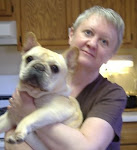


I'm sure you've heard the term, "seeing through rose-colored glasses." That would probably describe me, the eternal optimist. Many of us also see the world through fat-colored glasses, with lenses that look clear but drastically distort our perception of fat and thin. I've been going through a strange and frustrating period of seeing myself as fat every time I look in the mirror even though my weight has not changed. The other day I realized that my vision is also distorted when I look at other people, thanks to a lesson I learned from my friend Lisa B.
Lisa lost 114 pounds after having RNY (gastric bypass) in 2001. She was proud to be thin, and with obnoxiously big (her term) augmented breasts and movie-star smile, she was smokin' hot.
But eventually her stomach pouch stretched out, she ate more and more, and her weight shot back up, a 44 pound increase. In May 2009, Lisa had what's known as BOB surgery - band over bypass. Since then, she's lost 70 lbs. and is back to being that smokin' hot lady. Because I'm always recruiting before/during/after photos to help inspire other bandsters, Lisa kindly gave me permission to publish hers in the Bandwagon on the Road newsletter and in the 2nd edition of Bandwagon. When I first saw Lisa's after photos, I was disturbed and told her, "You look very scrawny. Have you seen your doc lately, and does he/she think your current weight is healthy?"
Lisa's reply was illuminating on several levels. She wrote (in part):
"I still see my surgeon every 3 months as well as my NUT and they both said that because I am small-framed, I am at a really healthy weight (I always thought I was big-boned, turns out I was just fat LMAO). All of my stats are where they should be...body fat percentage, waist-to-hip ratio, etc., and my labs are perfect each time too.
"This is the exact weight that my body stopped losing at 18 months ago and has remained at ever since...literally haven't fluctuated more than 2 lbs up. So my doctor said this is where my body is happy - this is my 'normal' now. He also said early on that if a "normal" (meaning never obese, I guess) person was my size their whole life, it would not be an issue...they would be considered a "naturally thin person," (you know, the ones we grew up hating lol) but since I have never been a normal size until now, I can expect people to comment that I'm too thin (rather than normal and/or healthy). Which did happen when I first reached this weight a long time ago...but now everyone around me is used to it - not to mention they see how much I eat (7-8 times per day) and what I eat (healthy food choices 95% of the time) and so they all know that clearly this must be my body's 'normal'."
Well, those 2 paragraphs gave me a brand new view of body image! And who am I to judge what's normal for another person? Lisa's words immediately reminded me of one of my coworkers at JCPenney, a “naturally thin” college girl named Hailey. Her mom is short and heavy while her dad is tall and thin, and Hailey looks nothing like her mom and quite a lot like her dad. She’s in good health, with beautiful skin, good muscle tone, thick shiny hair, clear eyes, lots of energy, and as far as I’ve been able to see, eats well (for a college kid, anyway). As much as I tend to focus on body size, I've never thought much about Hailey's body size or shape. Her prominent characteristics to me are her kindness, intelligence, sense of humor, and (in terms of appearance) her great sense of color in her clothing choices.
The other day a customer (an elderly man) said to Hailey, “Girl, you gotta put some weight on you,” and Hailey laughed and said, “I think this is the way my body is meant to be.” When I look at Hailey, I don’t think, “She’s too thin.” She looks normal to me. I've known her for 2 years, she's been thin the whole time, and thin is her "normal". So it’s really interesting that I looked at Lisa's “after” photos and thought, “She’s too thin”!
Why do I look at 2 thin, attractive, healthy women and think one looks normal and the other looks too thin? The only difference is that I know Lisa is a WLS patient, and with that ID tag on her, I assume a host of things about her, including a tendency of some WLS patients to develop anorexic behavior and become too thin. And we all know what happens when you assume, right? Assuming makes an ass out of you and and ass out of me. So shame on me! If Lisa walked into my JCPenney store tomorrow (which would make my day!), I'd just be blown away by her slim good looks and that movie star smile. "Too thin" wouldn't even be on the horizon!
Monday, June 20, 2011

Monday, June 13, 2011
The Clean Plate Club
Are you a member of the clean plate club? Perhaps even its president?
I belonged to the CPC (Clean Plate Club) for over 50 years, so I consider myself something of an expert on it (and I am, after all, The World’s Greatest Living Expert on Everything). I thought it was a lifetime membership, but my bariatric surgeon rescued me from the CPC Cult – oh, excuse me, Club - and deprogrammed me so that I’m able to function more or less like a normal person now. Here’s my story.
I was inducted to the CPC as a child, when I was too young to realize that the promise of going to heaven if I always cleaned my plate was a bit more complicated than it sounded at the time. All I wanted to do at the time was to please the cult leaders: my mother and my grandmother.
I have reason to believe that my grandmother, whom I called Dranny, was the original founder of the CPC. Orphaned as a small child, she was passed around the family like an unwanted piece of furniture, and she raised her own children during the Great Depression. Through the combination of those circumstances and her own peculiar (and wonderful) character, Dranny was a pack rat. She didn’t live in filth and disorder (just the opposite, actually), but she couldn’t bear to throw anything away, especially not food. If three green peas were leftover from a meal and she hadn’t been able to persuade someone to eat them, she would lovingly place them in a custard cup covered with a shower-cap style cover (this was in the days before Glad Wrap), and store them in the fridge, where they would remain until someone ate them (or my mother threw them out while Dranny was in another room).
I’m a lot like my grandmother in various ways, and also something of a pack rat. So after eating my way through hundreds of childhood meals with Dranny and my mom (who was not a pack rat, but who was offended by the idea of wasting food that she’d worked so hard to procure and prepare), I emerged into adolescence with warring impulses – part of me still wanted to clean my plate, and part of me wanted to starve so that I could lose weight and be as skinny as the British supermodel, Twiggy.
One of my problems with meal planning and storage is that it's hard for me to predict how much food I'll be able to eat at a future meal. Often I don't know that until I've eaten several bites. My basic strategy for dealing with this unpredictability is to keep my plate clean from the very start so that the food I leave behind doesn't overwhelm me or provoke an attack of guilt that could bring down Dranny's wrath upon me.
A simple way to keep your plate clean is to prepare smaller batches of food so you won't be tempted by serving dishes overflowing with food or burdened with an excess of leftovers. I can't speak to recipes for baked goods (not my department), but most other recipes can be easily cut in half, thirds, or even quarters through the use of simple arithmetic.
Sometimes I prepare the whole recipe, subdivide into 2 or 3 batches, serve one batch immediately and freeze the other 2 for future use. When we lived in the northeast, the elderly widow who lived next door was delighted when we shared excess food with her. Sharing food with family, friends, and coworkers can yield multiple benefits. When I'm craving a food or recipe whose leftovers would be a problem for me to store (or resist), I prepare a big batch of it for whatever social event is on the horizon and keep only one or two portions of it at home so that we get to enjoy it without having to worry about to do with all that food. I use cheap, throw-away packaging so that no one can insist that I take my corning ware, Pyrex or Tupperware container of leftovers home with me.
You can also keep your plate clean by using the portioning technique I recommend for bandsters who are still learning their band eating skills, food portion sizes, and stop signals. Here's how it works for me. When planning my day's food (which I commit to my food log and my accountability partner every morning), I might decide that I'll eat 4 ounces (by weight) of chicken thigh and 1/2 cup of barley and veggy salad for dinner. Come dinner time, I grab my small plate (a salad plate) and put half of my planned meal on it: 2 ounces of chicken and ¼ cup of the salad. If I'm able to finish that, great. If I'm still physically hungry when I'm done with it, I go back to the kitchen and dish up the remaining 2 ounces of chicken and ¼ cup of salad. At the end of the meal, I'll probably have only 1 or 2 tablespoons worth of food to save or throw out instead of a plateful of food, therefore much less guilt to deal with.
When I do have a plateful of food leftover, I usually scrape it into a small plastic container that I can quickly grab and stick in my lunch bag when I go to work the next day. Fortunately, we actually like leftovers at our house, and arguments occasionally break out over unauthorized consumption of leftover food ("Who ate the rest of the eggplant Parmesan?!?"). The same approach works with restaurant meals. We're happy to take leftovers home in what used to be called a doggy bag (as if I'd share my Maryland crab cakes with a dog!).
My sister-in-law used to scrape leftover food into a bucket to add to her garden compost pile. I have no idea if that's a good practice. We'd have to have a 40' high electrified fence dug 20' into the ground and topped with razor wire in order to keep dogs, cats, deer, rats, raccoons, and other critters out of that kind of compost pile. I've also known people (including my mother) who fed leftover food to their 4-footed garbage disposals (dogs & cats), another practice that we avoid because why would you want to cultivate a fussy eater? Our pets have survived eating (stolen) candies (complete with foil wrappers), latex paint, and kip tails (fishing flies), and at our house, a fussy eater will end up starving because someone else is always willing to clean your plate for you, sometimes long before you've decided you're finished with it.
But what about the starving children? After over 3 years of banded life, I'm now able to detach myself from my emotional attachment to the food on my plate enough to throw out what's left. If it didn't taste right because my band was in an odd mood, if it caused me symptoms, if it wouldn't reheat or store well, I let it go. I haven't been struck by lightning for doing that, nor has God punished me with plagues, floods, or infestations.
Like many, I was raised to eat every meal while listening to a chorus singing the Children Are Starving in (fill in the blank) hymn. I agree that in world where so many children (and adults, and animals) go hungry, it is just plain wrong for an overfed middle-class person like me to waste or throw out food. But the fact is that me eating more food than my body needs (rather than throwing out) is not the solution to the problem of world hunger. The solution to world hunger, and to diminishing global food resources, is far, far more complicated than that. Working in your community (be it a village, a city, a country, or a planet) to solve that problem is a worthwhile effort, but you taking personal responsibility for causing the death of a starving, unknown child in India or Appalachia because you threw out a chicken wing and 5 green beans last night is a misguided and foolish use of your energy.
And you eating that extra bite of food just because you can't bear the thought of throwing it away is also foolish from a medical standpoint. If that extra bite causes you to PB, get stuck, or over-pack your pouch, it could lead to messy and expensive medical complications like esophageal or pouch dilation and/or band slips, especially if you eat that way on a regular basis.
I belonged to the CPC (Clean Plate Club) for over 50 years, so I consider myself something of an expert on it (and I am, after all, The World’s Greatest Living Expert on Everything). I thought it was a lifetime membership, but my bariatric surgeon rescued me from the CPC Cult – oh, excuse me, Club - and deprogrammed me so that I’m able to function more or less like a normal person now. Here’s my story.
I was inducted to the CPC as a child, when I was too young to realize that the promise of going to heaven if I always cleaned my plate was a bit more complicated than it sounded at the time. All I wanted to do at the time was to please the cult leaders: my mother and my grandmother.
I have reason to believe that my grandmother, whom I called Dranny, was the original founder of the CPC. Orphaned as a small child, she was passed around the family like an unwanted piece of furniture, and she raised her own children during the Great Depression. Through the combination of those circumstances and her own peculiar (and wonderful) character, Dranny was a pack rat. She didn’t live in filth and disorder (just the opposite, actually), but she couldn’t bear to throw anything away, especially not food. If three green peas were leftover from a meal and she hadn’t been able to persuade someone to eat them, she would lovingly place them in a custard cup covered with a shower-cap style cover (this was in the days before Glad Wrap), and store them in the fridge, where they would remain until someone ate them (or my mother threw them out while Dranny was in another room).
I’m a lot like my grandmother in various ways, and also something of a pack rat. So after eating my way through hundreds of childhood meals with Dranny and my mom (who was not a pack rat, but who was offended by the idea of wasting food that she’d worked so hard to procure and prepare), I emerged into adolescence with warring impulses – part of me still wanted to clean my plate, and part of me wanted to starve so that I could lose weight and be as skinny as the British supermodel, Twiggy.
One of my problems with meal planning and storage is that it's hard for me to predict how much food I'll be able to eat at a future meal. Often I don't know that until I've eaten several bites. My basic strategy for dealing with this unpredictability is to keep my plate clean from the very start so that the food I leave behind doesn't overwhelm me or provoke an attack of guilt that could bring down Dranny's wrath upon me.
A simple way to keep your plate clean is to prepare smaller batches of food so you won't be tempted by serving dishes overflowing with food or burdened with an excess of leftovers. I can't speak to recipes for baked goods (not my department), but most other recipes can be easily cut in half, thirds, or even quarters through the use of simple arithmetic.
Sometimes I prepare the whole recipe, subdivide into 2 or 3 batches, serve one batch immediately and freeze the other 2 for future use. When we lived in the northeast, the elderly widow who lived next door was delighted when we shared excess food with her. Sharing food with family, friends, and coworkers can yield multiple benefits. When I'm craving a food or recipe whose leftovers would be a problem for me to store (or resist), I prepare a big batch of it for whatever social event is on the horizon and keep only one or two portions of it at home so that we get to enjoy it without having to worry about to do with all that food. I use cheap, throw-away packaging so that no one can insist that I take my corning ware, Pyrex or Tupperware container of leftovers home with me.
You can also keep your plate clean by using the portioning technique I recommend for bandsters who are still learning their band eating skills, food portion sizes, and stop signals. Here's how it works for me. When planning my day's food (which I commit to my food log and my accountability partner every morning), I might decide that I'll eat 4 ounces (by weight) of chicken thigh and 1/2 cup of barley and veggy salad for dinner. Come dinner time, I grab my small plate (a salad plate) and put half of my planned meal on it: 2 ounces of chicken and ¼ cup of the salad. If I'm able to finish that, great. If I'm still physically hungry when I'm done with it, I go back to the kitchen and dish up the remaining 2 ounces of chicken and ¼ cup of salad. At the end of the meal, I'll probably have only 1 or 2 tablespoons worth of food to save or throw out instead of a plateful of food, therefore much less guilt to deal with.
When I do have a plateful of food leftover, I usually scrape it into a small plastic container that I can quickly grab and stick in my lunch bag when I go to work the next day. Fortunately, we actually like leftovers at our house, and arguments occasionally break out over unauthorized consumption of leftover food ("Who ate the rest of the eggplant Parmesan?!?"). The same approach works with restaurant meals. We're happy to take leftovers home in what used to be called a doggy bag (as if I'd share my Maryland crab cakes with a dog!).
My sister-in-law used to scrape leftover food into a bucket to add to her garden compost pile. I have no idea if that's a good practice. We'd have to have a 40' high electrified fence dug 20' into the ground and topped with razor wire in order to keep dogs, cats, deer, rats, raccoons, and other critters out of that kind of compost pile. I've also known people (including my mother) who fed leftover food to their 4-footed garbage disposals (dogs & cats), another practice that we avoid because why would you want to cultivate a fussy eater? Our pets have survived eating (stolen) candies (complete with foil wrappers), latex paint, and kip tails (fishing flies), and at our house, a fussy eater will end up starving because someone else is always willing to clean your plate for you, sometimes long before you've decided you're finished with it.
But what about the starving children? After over 3 years of banded life, I'm now able to detach myself from my emotional attachment to the food on my plate enough to throw out what's left. If it didn't taste right because my band was in an odd mood, if it caused me symptoms, if it wouldn't reheat or store well, I let it go. I haven't been struck by lightning for doing that, nor has God punished me with plagues, floods, or infestations.
Like many, I was raised to eat every meal while listening to a chorus singing the Children Are Starving in (fill in the blank) hymn. I agree that in world where so many children (and adults, and animals) go hungry, it is just plain wrong for an overfed middle-class person like me to waste or throw out food. But the fact is that me eating more food than my body needs (rather than throwing out) is not the solution to the problem of world hunger. The solution to world hunger, and to diminishing global food resources, is far, far more complicated than that. Working in your community (be it a village, a city, a country, or a planet) to solve that problem is a worthwhile effort, but you taking personal responsibility for causing the death of a starving, unknown child in India or Appalachia because you threw out a chicken wing and 5 green beans last night is a misguided and foolish use of your energy.
And you eating that extra bite of food just because you can't bear the thought of throwing it away is also foolish from a medical standpoint. If that extra bite causes you to PB, get stuck, or over-pack your pouch, it could lead to messy and expensive medical complications like esophageal or pouch dilation and/or band slips, especially if you eat that way on a regular basis.
Tuesday, June 7, 2011
My Cup Runneth Over
I overate for something like 50 years, never feeling that there was enough food in the entire universe to fill the hole inside me. Now, my cup finally runneth over, in the sense of Psalm 23:5 - I have more than enough for my needs.
Psalm 23 is the "The Lord is my shepherd, I shall not want" psalm, nowadays often recited during funeral services as grieving family and friends send the deceased off into the valley of the Shadow of Death. Its message is that as long as we dwell in the house of the Lord, our tables will be filled for us while our enemies watch and perhaps starve. Of course, this scene of a table piled high with food and overflowing with wine is symbolic rather than literal. Christians (among others) seek spiritual as well as physical nourishment. But as in many songs, poems, and stories, the message of Psalm 23 is powerful because the symbols it uses are such important and recognizable ones, at least for me. Few humans can fail to grasp the ideas of "want" (meaning "lacking" rather than "desire) and of plenty ("my cup runneth over") when it comes to food and eating.
But although I was baptized as an infant, confirmed as a Methodist at age 13, and confirmed as an Episcopalian at age 49, I failed to grasp the concept of "plenty" for a very long time, especially in reference to food. It's truly a miracle to me now to feel that I have enough food for my needs.
What has changed? I'm still a well-educated middle-class citizen of a country so overflowing with food that a third of its population is overweight. I've never had to worry about where my next meal was coming from, though at times it felt that way to me. What's changed is that I now have an adjustable gastric band that is interfering (in a good way) with the satiety signals that zip back and forth between my brain and my body.
When bandsters complain that their band isn't working because they never experience satiety, I have to wonder what their definition of satiety is, and sometimes I want to say in a quiet, nerdy, Zen-esque way, "You're not listening closely enough." While it's true that a great deal of my weight loss success is related to my conscious meal planning, food choices, and portion control (just like dieting in the bad old days), another big chunk of it is a mystery to me, perhaps beyond my capacity to ever understand. I don't think it's simply a placebo effect (in which the efficacy of my band is caused by my belief in its power to work), because pieces of the mystery are revealed to me in such a haphazard way. For example:
Yesterday I made a beautiful dinner of teriyaki pork kebabs, edamame cakes, and roasted peaches. It smelled divine while it was cooking and I was well-supplied with both appetite and physical hunger when we sat down at the table to eat. The first bite of the pork tasted very bland to me despite the teriyaki sauce and I wondered if I'd forgotten an ingredient. The second bite tasted the same as the first bite, plus its texture was unpleasant. It was moist and tender, but I wanted to spit it out. I think I was probably a toddler the last time I spit food onto the dining table (or high chair). I finished chewing the bite of pork and said to my husband, "I'm sorry, this pork is nothing special." And he said, "What are you talking about? It's delicious!"
Suddenly I heard the flapping of tiny wings in my brain...my band fairy waving her magic wand and singing in a twinkling little voice, "You don't have to eat it!" So I didn't. I enjoyed my edamame cake and roasted peach half very much instead, and although I'd eaten perhaps half a cup of food altogether, I felt very satisfied. I was still a bit puzzled about my "rejection" of the pork, but on the whole, my cup runneth over. I had more than enough for my needs, and the uneaten food on my plate went into the mouth of our electric pig. Throwing out uneaten food is no small deal for me, and I've promised my friend Claudia to devote a future newsletter to that subject, so all I'll say right now is that although I felt a slight twinge of disappointment as I scraped the food off my plate, as soon as it was gone my mind moved on to the next thing (cleaning the kitchen) without any regret.
Hmmmm...I seem to hear some murmuring from your direction...you're muttering, "That's all very well for Jean to say, but I've only had my band for 3 months and I'm not feeling anything like satiety yet!" All I can tell you is, hang in there. You might need more fill, or different food choices, or more frequent meals/snacks. Unfortunately success with the adjustable gastric band is not an exact science. Individual patients don't react identically to the band any more than individual patients react identically to a dose of a pain killer. After taking 30 mg of codeine, some people experience blessed pain relief, some people get high, and some people get sick to their stomach. This is one of the reasons that there is no such thing as DIY bariatric surgery or DIY pharmaceuticals (or legal ones, anyway).
Psalm 23 is the "The Lord is my shepherd, I shall not want" psalm, nowadays often recited during funeral services as grieving family and friends send the deceased off into the valley of the Shadow of Death. Its message is that as long as we dwell in the house of the Lord, our tables will be filled for us while our enemies watch and perhaps starve. Of course, this scene of a table piled high with food and overflowing with wine is symbolic rather than literal. Christians (among others) seek spiritual as well as physical nourishment. But as in many songs, poems, and stories, the message of Psalm 23 is powerful because the symbols it uses are such important and recognizable ones, at least for me. Few humans can fail to grasp the ideas of "want" (meaning "lacking" rather than "desire) and of plenty ("my cup runneth over") when it comes to food and eating.
But although I was baptized as an infant, confirmed as a Methodist at age 13, and confirmed as an Episcopalian at age 49, I failed to grasp the concept of "plenty" for a very long time, especially in reference to food. It's truly a miracle to me now to feel that I have enough food for my needs.
What has changed? I'm still a well-educated middle-class citizen of a country so overflowing with food that a third of its population is overweight. I've never had to worry about where my next meal was coming from, though at times it felt that way to me. What's changed is that I now have an adjustable gastric band that is interfering (in a good way) with the satiety signals that zip back and forth between my brain and my body.
When bandsters complain that their band isn't working because they never experience satiety, I have to wonder what their definition of satiety is, and sometimes I want to say in a quiet, nerdy, Zen-esque way, "You're not listening closely enough." While it's true that a great deal of my weight loss success is related to my conscious meal planning, food choices, and portion control (just like dieting in the bad old days), another big chunk of it is a mystery to me, perhaps beyond my capacity to ever understand. I don't think it's simply a placebo effect (in which the efficacy of my band is caused by my belief in its power to work), because pieces of the mystery are revealed to me in such a haphazard way. For example:
Yesterday I made a beautiful dinner of teriyaki pork kebabs, edamame cakes, and roasted peaches. It smelled divine while it was cooking and I was well-supplied with both appetite and physical hunger when we sat down at the table to eat. The first bite of the pork tasted very bland to me despite the teriyaki sauce and I wondered if I'd forgotten an ingredient. The second bite tasted the same as the first bite, plus its texture was unpleasant. It was moist and tender, but I wanted to spit it out. I think I was probably a toddler the last time I spit food onto the dining table (or high chair). I finished chewing the bite of pork and said to my husband, "I'm sorry, this pork is nothing special." And he said, "What are you talking about? It's delicious!"
Suddenly I heard the flapping of tiny wings in my brain...my band fairy waving her magic wand and singing in a twinkling little voice, "You don't have to eat it!" So I didn't. I enjoyed my edamame cake and roasted peach half very much instead, and although I'd eaten perhaps half a cup of food altogether, I felt very satisfied. I was still a bit puzzled about my "rejection" of the pork, but on the whole, my cup runneth over. I had more than enough for my needs, and the uneaten food on my plate went into the mouth of our electric pig. Throwing out uneaten food is no small deal for me, and I've promised my friend Claudia to devote a future newsletter to that subject, so all I'll say right now is that although I felt a slight twinge of disappointment as I scraped the food off my plate, as soon as it was gone my mind moved on to the next thing (cleaning the kitchen) without any regret.
Hmmmm...I seem to hear some murmuring from your direction...you're muttering, "That's all very well for Jean to say, but I've only had my band for 3 months and I'm not feeling anything like satiety yet!" All I can tell you is, hang in there. You might need more fill, or different food choices, or more frequent meals/snacks. Unfortunately success with the adjustable gastric band is not an exact science. Individual patients don't react identically to the band any more than individual patients react identically to a dose of a pain killer. After taking 30 mg of codeine, some people experience blessed pain relief, some people get high, and some people get sick to their stomach. This is one of the reasons that there is no such thing as DIY bariatric surgery or DIY pharmaceuticals (or legal ones, anyway).
Tuesday, May 24, 2011
Last Meal Syndrome
Last Meal Syndrome is very common among people facing weight loss surgery, and chances are you've already suffered it some time in your life, perhaps the day before you started New Diet #832. Since New Diets almost always start on a Monday (there may be a law of nature covering that), you spent every minute of Sunday gorging on all the foods you could no longer eat come Monday morning. You ate so much that you made yourself slightly ill, and you probably didn't taste half of that food in your haste to cram it into your mouth.
Overeating because of anticipated deprivation is an old, old habit. Until the earliest humans learned to plant seeds and cultivate their own food supply, nutrition was largely a matter of opportunism. If you caught a big fish or felled an animal by heaving a rock at it, you ate it all because you didn't know when another meal would swim, crawl, walk, or fly by.
Although I sometimes joke that being self-employed is terrifying for me because it's a hand-to-mouth existence, at no time in my middle-class American life have I ever been truly threatened by significant food deprivation. My repeated bouts with Last Meal Syndrome have been caused mostly by my emotional over-attachment to food. When starting a new weight loss diet, or contemplating my coming bariatric surgery, I was terrified not that I would starve, but that I would suffer from emotional pain, boredom, or stress unrelieved by my usual comfort: whatever food I wanted, when I wanted it, in any quantity I wanted. Intellectually I knew that I would be able to eat small amounts of healthy foods and thus lose weight and gain better health, but the spoiled, petulant child within me feared and hated the very thought of that.
A few days before I was banded, my husband asked me, "Are you going to have anything special to eat before your surgery?"
I said, "I'm on a clear liquid diet for the next three days. I can't eat anything at all, never mind something special." My surgeon had told me that if my liver wasn't in good shape (that is, having a manageable size and texture), he would bail out of my surgery. After all I had gone through to get to the operating room, I wasn't going to blow it, and it wasn't (as I reminded myself) as if I would never be able to eat again in my entire life. I was facing food deprivation, yes, but for a matter of days, not years.
Now, let's get one thing clear here: I'm not claiming superiority over pre-ops who give in to Last Meal Syndrome and celebrate their own private food festival a day or so before their surgery. My compliance with my surgeon's instructions was driven by fear, plain and simple. I wasn't (then or now) a paragon of virtue. But in the last three years, I've learned something important that newbies and wannabes may not realize about the adjustable gastric band. And that is:
The only food deprivation you will suffer after band surgery involves the QUANTITY, not the quality or nature of the food you eat. With a properly adjusted band, you should be able to eat a wide variety of foods you like. You don't have to give up Cheetos or Haagen Daz or McDonald's or prime rib of beef forever. All you have to give up is eating those foods in excess. It's true that when your daily calorie budget is limited, your health will depend on your making the best possible food choices - eating a piece of cheese instead of the Cheetos, a Skinny Cow ice cream bar instead of a gallon of Rocky Road, a Happy Meal instead of a quarter-pounder, two ounces of prime rib instead of the whole cow. You and your band will still be able to tolerate just about anything, so when you look down the road that your bandwagon will travel, you should see plenty of nice places to stop and eat instead of a dry, barren desert in which you'll have to subsist on stale melba toast and lukewarm water.
That's the good news. Now here's the bad news:
After band surgery, you'll be able to eat a wide variety of foods you like. Yes, I know I already said that, up there in the good news paragraph. But the tolerance of almost any food you can imagine means that you will have to exert some self-control to avoid overindulging. Now you may be thinking, "If I had any self-control, I wouldn't need weight loss surgery." If the need for self-control is a deal-breaker for you, maybe you should consider a different bariatric procedure, one that will allow you to eat anything at all and lose a pound a day. I'm not convinced that such a procedure exists, because I've heard too many gastric bypass (and even duodenal switch) patients moaning about significant weight regain, but by all means give the Magic Weight Loss Surgery a go. Maybe self-control will never be an issue for you again.
After your surgery, will you be sentenced to a lifetime of stale bread and water?
No.
I have a few more words to say about self-control, but right now I want to reassure you that eating with your gastric band is not going to involve an endless series of dreary meals. It's not going to be like the mysteriously popular diet that requires you to eat nothing but cabbage soup three times a day. It's going to involve eating like a normal person who enjoys food but has a small appetite. Depending on your experience of restriction after each fill, you may have to forgo certain foods at times, but just because you can't comfortably eat a bagel with cream cheese today doesn't mean you'll never again be able to have a few bites of bagel. Your food tolerance is going to depend not only on your fill level but also on your eating skills. The day after my first fill, I suffered my first stuck episode after taking a huge bite of a grilled cheese sandwich. I have a lot more fill in my band now but I could eat that same sandwich for lunch today because now I'm used to eating slowly, taking tiny bites and chewing the food very well. I probably wouldn't eat the whole sandwich because I'd get "full" so quickly, and that's a good thing!
Overeating because of anticipated deprivation is an old, old habit. Until the earliest humans learned to plant seeds and cultivate their own food supply, nutrition was largely a matter of opportunism. If you caught a big fish or felled an animal by heaving a rock at it, you ate it all because you didn't know when another meal would swim, crawl, walk, or fly by.
Although I sometimes joke that being self-employed is terrifying for me because it's a hand-to-mouth existence, at no time in my middle-class American life have I ever been truly threatened by significant food deprivation. My repeated bouts with Last Meal Syndrome have been caused mostly by my emotional over-attachment to food. When starting a new weight loss diet, or contemplating my coming bariatric surgery, I was terrified not that I would starve, but that I would suffer from emotional pain, boredom, or stress unrelieved by my usual comfort: whatever food I wanted, when I wanted it, in any quantity I wanted. Intellectually I knew that I would be able to eat small amounts of healthy foods and thus lose weight and gain better health, but the spoiled, petulant child within me feared and hated the very thought of that.
A few days before I was banded, my husband asked me, "Are you going to have anything special to eat before your surgery?"
I said, "I'm on a clear liquid diet for the next three days. I can't eat anything at all, never mind something special." My surgeon had told me that if my liver wasn't in good shape (that is, having a manageable size and texture), he would bail out of my surgery. After all I had gone through to get to the operating room, I wasn't going to blow it, and it wasn't (as I reminded myself) as if I would never be able to eat again in my entire life. I was facing food deprivation, yes, but for a matter of days, not years.
Now, let's get one thing clear here: I'm not claiming superiority over pre-ops who give in to Last Meal Syndrome and celebrate their own private food festival a day or so before their surgery. My compliance with my surgeon's instructions was driven by fear, plain and simple. I wasn't (then or now) a paragon of virtue. But in the last three years, I've learned something important that newbies and wannabes may not realize about the adjustable gastric band. And that is:
The only food deprivation you will suffer after band surgery involves the QUANTITY, not the quality or nature of the food you eat. With a properly adjusted band, you should be able to eat a wide variety of foods you like. You don't have to give up Cheetos or Haagen Daz or McDonald's or prime rib of beef forever. All you have to give up is eating those foods in excess. It's true that when your daily calorie budget is limited, your health will depend on your making the best possible food choices - eating a piece of cheese instead of the Cheetos, a Skinny Cow ice cream bar instead of a gallon of Rocky Road, a Happy Meal instead of a quarter-pounder, two ounces of prime rib instead of the whole cow. You and your band will still be able to tolerate just about anything, so when you look down the road that your bandwagon will travel, you should see plenty of nice places to stop and eat instead of a dry, barren desert in which you'll have to subsist on stale melba toast and lukewarm water.
That's the good news. Now here's the bad news:
After band surgery, you'll be able to eat a wide variety of foods you like. Yes, I know I already said that, up there in the good news paragraph. But the tolerance of almost any food you can imagine means that you will have to exert some self-control to avoid overindulging. Now you may be thinking, "If I had any self-control, I wouldn't need weight loss surgery." If the need for self-control is a deal-breaker for you, maybe you should consider a different bariatric procedure, one that will allow you to eat anything at all and lose a pound a day. I'm not convinced that such a procedure exists, because I've heard too many gastric bypass (and even duodenal switch) patients moaning about significant weight regain, but by all means give the Magic Weight Loss Surgery a go. Maybe self-control will never be an issue for you again.
After your surgery, will you be sentenced to a lifetime of stale bread and water?
No.
I have a few more words to say about self-control, but right now I want to reassure you that eating with your gastric band is not going to involve an endless series of dreary meals. It's not going to be like the mysteriously popular diet that requires you to eat nothing but cabbage soup three times a day. It's going to involve eating like a normal person who enjoys food but has a small appetite. Depending on your experience of restriction after each fill, you may have to forgo certain foods at times, but just because you can't comfortably eat a bagel with cream cheese today doesn't mean you'll never again be able to have a few bites of bagel. Your food tolerance is going to depend not only on your fill level but also on your eating skills. The day after my first fill, I suffered my first stuck episode after taking a huge bite of a grilled cheese sandwich. I have a lot more fill in my band now but I could eat that same sandwich for lunch today because now I'm used to eating slowly, taking tiny bites and chewing the food very well. I probably wouldn't eat the whole sandwich because I'd get "full" so quickly, and that's a good thing!
Thou Shalt Not
Somewhere in the dark mists of my distance past, the term “reverse psychology” entered my awareness, especially as applied to child-rearing. The idea was that if you told your child “Please slam the door when you leave the house,” the defiant devil in that child would shut the door quietly in opposition to your instruction. I don’t have human children and never observed reverse psychology work magic in my childhood home. No matter how firmly you told my brother not to brush his teeth, his teeth went unbrushed. Telling him to jump on the bed would trigger a marathon jumping session (causing the box spring to violently part company with the bed frame) instead of a peaceful bedtime story. And I was no angel – I rewarded my mom’s laissez-faire attitude towards teen dating by involving myself with the worst losers I could find.
Despite all that, I know there’s a kernel of truth in the concept of reverse psychology. If you told me I must never, ever eat chocolate again, I’d get started on a chocolate binge before you even finished your sentence. And if you told me, “Thou shalt not even think about potato chips,” my every waking and dreaming moment would be filled with potato chips.
Unfortunately, this principle doesn’t work in both directions, at least not for me. If you told me, “You must eat nothing but ice cream this week,” I’d be happy to comply. I’d grab my car keys and ice cream scoop and race to the frozen foods section of the nearest supermarket (after a quick stop at Baskin Robbins).
Author and eating disorder expert Geneen Roth tells a story about a mother who worried about her daughter’s weight. Even when the mom locked sweets up in a cabinet, the daughter managed to smuggle sweets into the house and hide in her bedroom to gorge on them. When the mom took Roth’s advice to give the child free access to sweets, the girl tired of them and began to make healthier food choices within a few days. This was a clear case of what I call Forbidden Food Syndrome, in which forced abstinence increases the person’s desire for the “bad” food.
I don’t doubt that Roth’s advice in that case was sound, but in my personal experience, food rules aren’t the only cause of secretive food hoarding and gorging. My mom’s food rules had more to do with good manners than with nutrition. I had to take at least one bite of each food on my plate, chew with my mouth shut, ask for permission to leave the table, and dirty no dishes after supper. Other than that, I could eat whatever I wanted, in any quantity. Even with that much freedom, I would hoard and binge on sweets, alone in my room, at every opportunity. I wasn’t eating out of defiance, but neither was I eating for “good” or healthy reasons. Even at age nine, I was eating for emotional reasons – comfort, numbing, entertainment, you name it.
As an adult, I have a better handle on my emotional eating than I did at age nine. I’m well aware of the food-obsessed Jeannie who will run without hesitation right into rush-hour traffic if a brownie might be waiting for me on the other side of the road. I know intimately the defiant Jeannie who insists on eating a piece of garlic bread even though she knows that the third or fourth bite could easily get stuck in her stoma and cause a lot of discomfort. I have to monitor myself every day in order to maintain the delicate balance between choosing not to eat a piece of birthday cake because eating it doesn’t serve my weight management goals and choosing to go ahead and eat the entire cake simply because I know it doesn’t serve my weight management goals.
Sometimes I feel like a freak because I have to deal with issues like this. I watch “normal” people making carefree eating choices and enjoying complete eating freedom with no awful consequences (or at least, that’s the way it looks to me), and deep down inside, I hate those normal people. They’re not yoked to this heavy burden of disordered eating like I am. It’s just not fair. But I’m gradually relaxing about my eating issues enough to be able to listen better and to hear more messages from my normal friends and acquaintances, and to realize that they too struggle with things like Forbidden Food Syndrome from time to time.
I have a disgustingly healthy co-worker who told me recently that she can’t eat chocolate because it gives her bad migraine headaches. She avoids chocolate, but she confessed that she wants it all the more because she can’t have it, and when she tells herself it’s OK to eat one small piece, she finds that she can’t stop – she eats three, five, seven pieces even though she knows she’ll pay for it sooner or later. She doesn’t pay with obesity, she pays with pain. She doesn’t know the pain of obesity as I do, but she and I struggled with the same basic problem. Little does she know how valuable her chocolate story is to me. It reminds me that I’m really not a freak – I just have a more intense and widespread eating problem than hers. It’s a matter of degrees. She’s five degrees off-center while I’m 45 degrees off. Neither of us is perfect. We both have to work at making good choices – not just in our eating behavior, but in every piece of behavior that could have good or bad consequences for us or for our family and friends. To my mind, this is just part of human existence, part of the responsibility that adult humans bear for maintaining a civilized and (we hope) peaceful co-existence with each other and ourselves.
Having to deal with eating choices may seem like an awful burden at times. So many people have bariatric surgery believing or hoping that it will solve everything, that they’ll never have to struggle with eating again. Most of the time, that’s not the happy ending to their story. Their story has a different ending that could be happy if they adjust their thinking to it. Is the burden of good eating choices too heavy for you? Your surgery helped you lose all that weight, shouldn’t it help you maintain that weight loss without another thought for the rest of your life? That’s a nice idea, but it’s not realistic. It’s kind of like hitting the “seven-year itch” in a marriage. You had a romantic honeymoon with your band, things were great for a while, and then things got harder and harder. You can fall in love with another bariatric procedure, believing that a revision to gastric bypass or whatever will hand you the key to happily-ever-after. Or you can stick with the partner you already have, survive some tough times, and come out of it all the stronger.
All this may be too philosophical for you, but I’m telling you about it because thinking about my eating problems this way has helped to put them in perspective, and putting them in perspective makes them a lot more manageable. Perspective is the art of seeing things in correct relationship to each other. As I wrote in Bandwagon, without perspective, my computer’s monitor looks ten times bigger than my neighbor’s barn across the road. In fact, my computer monitor is tiny compared to that barn. Without perspective, my weight management challenges seem enormous. I lost all that weight in just one year, but my maintenance job goes on forever. But consider the alternative. I could go back to obesity. I could have a stroke and become a human vegetable, reliant on others for everything from speech to toileting. I could lose my limbs to diabetes, reliant then on others for everything from tooth-brushing to transportation. I could suffer cardiac arrest and die at age 60. Or I can work at maintaining my weight and my health, with a huge payoff of mobility, independence, and longevity.
So…back to Forbidden Food Syndrome. Although I’ve said that reverse psychology doesn’t always work with me, I must also say that one of the reasons I chose the band was that living with it would allow me to choose from a wide variety of foods I like. (Yes, I know I’ve used that phrase before, and I’ll probably use it again.) My nutritionist told me I might have problems eating certain foods, like celery or pasta, and I was willing to take the chance because life without celery or pasta still looked pretty good to me. But when my surgeon, speaking at the bariatric surgery informational seminar I attended, said that gastric bypass patients need to avoid all foods that are high in sugar, fat, or simple carbs because of the possibility of dumping, I mentally walked into a barbed wire fence and backed right off. At the time, I had one gastric bypass friend who didn’t dump, but the bypass patient who spoke at the seminar reported that he does dump, and when he described a typical day’s eating, I thought, “That’s not for me.” That guy was justifiably proud of his weight loss and didn’t mind a limited list of food choices, but I knew that limited food choices would send me running straight for the junk food if only out of sheer boredom. The night of that seminar, I hadn’t eaten a chocolate chip cookie for several months, but just the idea of giving up cookies forever made me want to stop at a bakery on the way home.
I chose the adjustable gastric band, and the breadth and flexibility of my “OK Foods” list is one of the things that makes my post-op life enjoyable. I do overeat from time to time, but not because of Forbidden Food Syndrome. Taking foods off the Forbidden list has robbed them of some of their power over me. As a pre-op, I would attend a co-worker’s birthday party and eat two pieces of cake (Forbidden) because I’d been avoiding cake and missing it so much. As a post-op, I recently walked through the break room at work and saw a birthday cake on the table. I briefly wondered what flavor it was (impossible to tell from the decorative frosting, whose colors can’t be found in nature) and told myself I could try a little piece of it later, on my official break. Lo and behold, come break time I was quite hungry and not in the mood for cake. I wanted my chicken salad, and when I was done with that, I had no room for cake, so I went back to work without another thought about birthday cake. Now,
Despite all that, I know there’s a kernel of truth in the concept of reverse psychology. If you told me I must never, ever eat chocolate again, I’d get started on a chocolate binge before you even finished your sentence. And if you told me, “Thou shalt not even think about potato chips,” my every waking and dreaming moment would be filled with potato chips.
Unfortunately, this principle doesn’t work in both directions, at least not for me. If you told me, “You must eat nothing but ice cream this week,” I’d be happy to comply. I’d grab my car keys and ice cream scoop and race to the frozen foods section of the nearest supermarket (after a quick stop at Baskin Robbins).
Author and eating disorder expert Geneen Roth tells a story about a mother who worried about her daughter’s weight. Even when the mom locked sweets up in a cabinet, the daughter managed to smuggle sweets into the house and hide in her bedroom to gorge on them. When the mom took Roth’s advice to give the child free access to sweets, the girl tired of them and began to make healthier food choices within a few days. This was a clear case of what I call Forbidden Food Syndrome, in which forced abstinence increases the person’s desire for the “bad” food.
I don’t doubt that Roth’s advice in that case was sound, but in my personal experience, food rules aren’t the only cause of secretive food hoarding and gorging. My mom’s food rules had more to do with good manners than with nutrition. I had to take at least one bite of each food on my plate, chew with my mouth shut, ask for permission to leave the table, and dirty no dishes after supper. Other than that, I could eat whatever I wanted, in any quantity. Even with that much freedom, I would hoard and binge on sweets, alone in my room, at every opportunity. I wasn’t eating out of defiance, but neither was I eating for “good” or healthy reasons. Even at age nine, I was eating for emotional reasons – comfort, numbing, entertainment, you name it.
As an adult, I have a better handle on my emotional eating than I did at age nine. I’m well aware of the food-obsessed Jeannie who will run without hesitation right into rush-hour traffic if a brownie might be waiting for me on the other side of the road. I know intimately the defiant Jeannie who insists on eating a piece of garlic bread even though she knows that the third or fourth bite could easily get stuck in her stoma and cause a lot of discomfort. I have to monitor myself every day in order to maintain the delicate balance between choosing not to eat a piece of birthday cake because eating it doesn’t serve my weight management goals and choosing to go ahead and eat the entire cake simply because I know it doesn’t serve my weight management goals.
Sometimes I feel like a freak because I have to deal with issues like this. I watch “normal” people making carefree eating choices and enjoying complete eating freedom with no awful consequences (or at least, that’s the way it looks to me), and deep down inside, I hate those normal people. They’re not yoked to this heavy burden of disordered eating like I am. It’s just not fair. But I’m gradually relaxing about my eating issues enough to be able to listen better and to hear more messages from my normal friends and acquaintances, and to realize that they too struggle with things like Forbidden Food Syndrome from time to time.
I have a disgustingly healthy co-worker who told me recently that she can’t eat chocolate because it gives her bad migraine headaches. She avoids chocolate, but she confessed that she wants it all the more because she can’t have it, and when she tells herself it’s OK to eat one small piece, she finds that she can’t stop – she eats three, five, seven pieces even though she knows she’ll pay for it sooner or later. She doesn’t pay with obesity, she pays with pain. She doesn’t know the pain of obesity as I do, but she and I struggled with the same basic problem. Little does she know how valuable her chocolate story is to me. It reminds me that I’m really not a freak – I just have a more intense and widespread eating problem than hers. It’s a matter of degrees. She’s five degrees off-center while I’m 45 degrees off. Neither of us is perfect. We both have to work at making good choices – not just in our eating behavior, but in every piece of behavior that could have good or bad consequences for us or for our family and friends. To my mind, this is just part of human existence, part of the responsibility that adult humans bear for maintaining a civilized and (we hope) peaceful co-existence with each other and ourselves.
Having to deal with eating choices may seem like an awful burden at times. So many people have bariatric surgery believing or hoping that it will solve everything, that they’ll never have to struggle with eating again. Most of the time, that’s not the happy ending to their story. Their story has a different ending that could be happy if they adjust their thinking to it. Is the burden of good eating choices too heavy for you? Your surgery helped you lose all that weight, shouldn’t it help you maintain that weight loss without another thought for the rest of your life? That’s a nice idea, but it’s not realistic. It’s kind of like hitting the “seven-year itch” in a marriage. You had a romantic honeymoon with your band, things were great for a while, and then things got harder and harder. You can fall in love with another bariatric procedure, believing that a revision to gastric bypass or whatever will hand you the key to happily-ever-after. Or you can stick with the partner you already have, survive some tough times, and come out of it all the stronger.
All this may be too philosophical for you, but I’m telling you about it because thinking about my eating problems this way has helped to put them in perspective, and putting them in perspective makes them a lot more manageable. Perspective is the art of seeing things in correct relationship to each other. As I wrote in Bandwagon, without perspective, my computer’s monitor looks ten times bigger than my neighbor’s barn across the road. In fact, my computer monitor is tiny compared to that barn. Without perspective, my weight management challenges seem enormous. I lost all that weight in just one year, but my maintenance job goes on forever. But consider the alternative. I could go back to obesity. I could have a stroke and become a human vegetable, reliant on others for everything from speech to toileting. I could lose my limbs to diabetes, reliant then on others for everything from tooth-brushing to transportation. I could suffer cardiac arrest and die at age 60. Or I can work at maintaining my weight and my health, with a huge payoff of mobility, independence, and longevity.
So…back to Forbidden Food Syndrome. Although I’ve said that reverse psychology doesn’t always work with me, I must also say that one of the reasons I chose the band was that living with it would allow me to choose from a wide variety of foods I like. (Yes, I know I’ve used that phrase before, and I’ll probably use it again.) My nutritionist told me I might have problems eating certain foods, like celery or pasta, and I was willing to take the chance because life without celery or pasta still looked pretty good to me. But when my surgeon, speaking at the bariatric surgery informational seminar I attended, said that gastric bypass patients need to avoid all foods that are high in sugar, fat, or simple carbs because of the possibility of dumping, I mentally walked into a barbed wire fence and backed right off. At the time, I had one gastric bypass friend who didn’t dump, but the bypass patient who spoke at the seminar reported that he does dump, and when he described a typical day’s eating, I thought, “That’s not for me.” That guy was justifiably proud of his weight loss and didn’t mind a limited list of food choices, but I knew that limited food choices would send me running straight for the junk food if only out of sheer boredom. The night of that seminar, I hadn’t eaten a chocolate chip cookie for several months, but just the idea of giving up cookies forever made me want to stop at a bakery on the way home.
I chose the adjustable gastric band, and the breadth and flexibility of my “OK Foods” list is one of the things that makes my post-op life enjoyable. I do overeat from time to time, but not because of Forbidden Food Syndrome. Taking foods off the Forbidden list has robbed them of some of their power over me. As a pre-op, I would attend a co-worker’s birthday party and eat two pieces of cake (Forbidden) because I’d been avoiding cake and missing it so much. As a post-op, I recently walked through the break room at work and saw a birthday cake on the table. I briefly wondered what flavor it was (impossible to tell from the decorative frosting, whose colors can’t be found in nature) and told myself I could try a little piece of it later, on my official break. Lo and behold, come break time I was quite hungry and not in the mood for cake. I wanted my chicken salad, and when I was done with that, I had no room for cake, so I went back to work without another thought about birthday cake. Now,
Tuesday, May 17, 2011
Forbidden Food
Somewhere in the dark mists of my distance past, the term "reverse psychology" entered my awareness, especially as applied to child-rearing. The idea was that if you told your child "Please slam the door when you leave the house," the defiant devil in that child would shut the door quietly in opposition to your instruction. I don't have human children and never observed reverse psychology work magic in my childhood home. No matter how firmly you told my brother not to brush his teeth, his teeth went unbrushed. Telling him to jump on the bed would trigger a marathon jumping session (causing the box spring to violently part company with the bed frame) instead of a peaceful bedtime story. And I was no angel - I rewarded my mom's laissez-faire attitude towards teen dating by involving myself with the worst losers I could find.
Despite all that, I know there's a kernel of truth in the concept of reverse psychology. If you told me I must never, ever eat chocolate again, I'd get started on a chocolate binge before you even finished your sentence. And if you told me, "Thou shalt not even think about potato chips," my every waking and dreaming moment would be filled with potato chips.
Unfortunately, this principle doesn't work in both directions, at least not for me. If you told me, "You must eat nothing but ice cream this week," I'd be happy to comply. I'd grab my car keys and ice cream scoop and race to the frozen foods section of the nearest supermarket (after a quick stop at Baskin Robbins).
Author and eating disorder expert Geneen Roth tells a story about a mother who worried about her daughter's weight. Even when the mom locked sweets up in a cabinet, the daughter managed to smuggle sweets into the house and hide in her bedroom to gorge on them. When the mom took Roth's advice to give the child free access to sweets, the girl tired of them and began to make healthier food choices within a few days. This was a clear case of what I call Forbidden Food Syndrome, in which forced abstinence increases the person's desire for the "bad" food.
I don't doubt that Roth's advice in that case was sound, but in my personal experience, food rules aren't the only cause of secretive food hoarding and gorging. My mom's food rules had more to do with good manners than with nutrition. I had to take at least one bite of each food on my plate, chew with my mouth shut, ask for permission to leave the table, and dirty no dishes after supper. Other than that, I could eat whatever I wanted, in any quantity. Even with that much freedom, I would hoard and binge on sweets, alone in my room, at every opportunity. I wasn't eating out of defiance, but neither was I eating for "good" or healthy reasons. Even at age nine, I was eating for emotional reasons - comfort, numbing, entertainment, you name it.
As an adult, I have a better handle on my emotional eating than I did at age nine. I'm well aware of the food-obsessed Jeannie who will run without hesitation right into rush-hour traffic if a brownie might be waiting for me on the other side of the road. I know intimately the defiant Jeannie who insists on eating a piece of garlic bread even though she knows that the third or fourth bite could easily get stuck in her stoma and cause a lot of discomfort. I have to monitor myself every day in order to maintain the delicate balance between choosing not to eat a piece of birthday cake because eating it doesn't serve my weight management goals and choosing to go ahead and eat the entire cake simply because I know it doesn't serve my weight management goals.
Sometimes I feel like a freak because I have to deal with issues like this. I watch "normal" people making carefree eating choices and enjoying complete eating freedom with no awful consequences (or at least, that's the way it looks to me), and deep down inside, I hate those normal people. They're not yoked to this heavy burden of disordered eating like I am. It's just not fair. But I'm gradually relaxing about my eating issues enough to be able to listen better and to hear more messages from my normal friends and acquaintances, and to realize that they too struggle with things like Forbidden Food Syndrome from time to time.
I have a disgustingly healthy co-worker who told me recently that she can't eat chocolate because it gives her bad migraine headaches. She avoids chocolate, but she confessed that she wants it all the more because she can't have it, and when she tells herself it's OK to eat one small piece, she finds that she can't stop - she eats three, five, seven pieces even though she knows she'll pay for it sooner or later. She doesn't pay with obesity, she pays with pain. She doesn't know the pain of obesity as I do, but she and I struggled with the same basic problem. Little does she know how valuable her chocolate story is to me. It reminds me that I'm really not a freak - I just have a more intense and widespread eating problem than hers. It's a matter of degrees. She's five degrees off-center while I'm 45 degrees off. Neither of us is perfect. We both have to work at making good choices - not just in our eating behavior, but in every piece of behavior that could have good or bad consequences for us or for our family and friends. To my mind, this is just part of human existence, part of the responsibility that adult humans bear for maintaining a civilized and (we hope) peaceful co-existence with each other and ourselves.
Having to deal with eating choices may seem like an awful burden at times. So many people have bariatric surgery believing or hoping that it will solve everything, that they'll never have to struggle with eating again. Most of the time, that's not the happy ending to their story. Their story has a different ending that could be happy if they adjust their thinking to it. Is the burden of good eating choices too heavy for you? Your surgery helped you lose all that weight, shouldn't it help you maintain that weight loss without another thought for the rest of your life? That's a nice idea, but it's not realistic. It's kind of like hitting the "seven-year itch" in a marriage. You had a romantic honeymoon with your band, things were great for a while, and then things got harder and harder. You can fall in love with another bariatric procedure, believing that a revision to gastric bypass or whatever will hand you the key to happily-ever-after. Or you can stick with the partner you already have, survive some tough times, and come out of it all the stronger.
All this may be too philosophical for you, but I'm telling you about it because thinking about my eating problems this way has helped to put them in perspective, and putting them in perspective makes them a lot more manageable. Perspective is the art of seeing things in correct relationship to each other. As I wrote in Bandwagon, without perspective, my computer's monitor looks ten times bigger than my neighbor's barn across the road. In fact, my computer monitor is tiny compared to that barn. Without perspective, my weight management challenges seem enormous. I lost all that weight in just one year, but my maintenance job goes on forever. But consider the alternative. I could go back to obesity. I could have a stroke and become a human vegetable, reliant on others for everything from speech to toileting. I could lose my limbs to diabetes, reliant then on others for everything from tooth-brushing to transportation. I could suffer cardiac arrest and die at age 60. Or I can work at maintaining my weight and my health, with a huge payoff of mobility, independence, and longevity.
So...back to Forbidden Food Syndrome. Although I've said that reverse psychology doesn't always work with me, I must also say that one of the reasons I chose the band was that living with it would allow me to choose from a wide variety of foods I like. (Yes, I know I've used that phrase before, and I'll probably use it again.) My nutritionist told me I might have problems eating certain foods, like celery or pasta, and I was willing to take the chance because life without celery or pasta still looked pretty good to me. But when my surgeon, speaking at the bariatric surgery informational seminar I attended, said that gastric bypass patients need to avoid all foods that are high in sugar, fat, or simple carbs because of the possibility of dumping, I mentally walked into a barbed wire fence and backed right off. At the time, I had one gastric bypass friend who didn't dump, but the bypass patient who spoke at the seminar reported that he does dump, and when he described a typical day's eating, I thought, "That's not for me." That guy was justifiably proud of his weight loss and didn't mind a limited list of food choices, but I knew that limited food choices would send me running straight for the junk food if only out of sheer boredom. The night of that seminar, I hadn't eaten a chocolate chip cookie for several months, but just the idea of giving up cookies forever made me want to stop at a bakery on the way home.
I chose the adjustable gastric band, and the breadth and flexibility of my "OK Foods" list is one of the things that makes my post-op life enjoyable. I do overeat from time to time, but not because of Forbidden Food Syndrome. Taking foods off the Forbidden list has robbed them of some of their power over me. As a pre-op, I would attend a co-worker's birthday party and eat two pieces of cake (Forbidden) because I'd been avoiding cake and missing it so much. As a post-op, I recently walked through the break room at work and saw a birthday cake on the table. I briefly wondered what flavor it was (impossible to tell from the decorative frosting, whose colors can't be found in nature) and told myself I could try a little piece of it later, on my official break. Lo and behold, come break time I was quite hungry and not in the mood for cake. I wanted my chicken salad, and when I was done with that, I had no room for cake, so I went back to work without another thought about birthday cake. Now, that's freedom!
Your assignment for today
What's on your forbidden foods list?
Tell all! Write to me at: jmcmillan159@gmail.com and give me your list of forbidden foods. Are they forbidden forever, or just for today? Is it safe for you to keep them in your house, or is it better to enjoy them at a restaurant where you don't have access to the whole pie or cake? How long have you been abstaining from these foods? Do you long for them every day, just occasionally, or when menstruating or stressed?
Although I try not to even think in terms of forbidden foods these days, I do have a short list of foods that are just plain dangerous for me. Here's it is:
1. Ice cream - it's not safe for me to keep ice cream in the house. In my obese days, I used to eat one half to a whole gallon of ice cream a day, straight from the container - no scoop required, just a spoon. I don't crave it any more, but I'm afraid that one spoonful is never going to be enough. The last time I had ice cream was August 2010, when my friend Lisa and her husband and dogs took me to the beach in Oregon. It was divine, and I was sorely disappointed when my little scoop of heaven was gone.
2. Cool Whip - after eating an entire 8-ounce container of Cool Whip one night when I was craving ice cream, I realized that Cool Whip isn't safe to have around either. Fortunately, it doesn't appeal to me in the least when I'm walking down the freezer aisle at the supermarket.
3. Potato Chips - I literally cannot eat "just one". Ever! I don't care if they're baked instead of fried, or made of organic Tasmanian parsnips enriched with pomegranate, green tea and beet extract. The last time I ate potato chips was at a potluck lunch at work last Christmas. I was surrounded by coworkers who believe I'm a health food nut, so their attention made it possible for me to limit my consumption. I don't walk down the chip and snack aisle at the supermarket any more.
Despite all that, I know there's a kernel of truth in the concept of reverse psychology. If you told me I must never, ever eat chocolate again, I'd get started on a chocolate binge before you even finished your sentence. And if you told me, "Thou shalt not even think about potato chips," my every waking and dreaming moment would be filled with potato chips.
Unfortunately, this principle doesn't work in both directions, at least not for me. If you told me, "You must eat nothing but ice cream this week," I'd be happy to comply. I'd grab my car keys and ice cream scoop and race to the frozen foods section of the nearest supermarket (after a quick stop at Baskin Robbins).
Author and eating disorder expert Geneen Roth tells a story about a mother who worried about her daughter's weight. Even when the mom locked sweets up in a cabinet, the daughter managed to smuggle sweets into the house and hide in her bedroom to gorge on them. When the mom took Roth's advice to give the child free access to sweets, the girl tired of them and began to make healthier food choices within a few days. This was a clear case of what I call Forbidden Food Syndrome, in which forced abstinence increases the person's desire for the "bad" food.
I don't doubt that Roth's advice in that case was sound, but in my personal experience, food rules aren't the only cause of secretive food hoarding and gorging. My mom's food rules had more to do with good manners than with nutrition. I had to take at least one bite of each food on my plate, chew with my mouth shut, ask for permission to leave the table, and dirty no dishes after supper. Other than that, I could eat whatever I wanted, in any quantity. Even with that much freedom, I would hoard and binge on sweets, alone in my room, at every opportunity. I wasn't eating out of defiance, but neither was I eating for "good" or healthy reasons. Even at age nine, I was eating for emotional reasons - comfort, numbing, entertainment, you name it.
As an adult, I have a better handle on my emotional eating than I did at age nine. I'm well aware of the food-obsessed Jeannie who will run without hesitation right into rush-hour traffic if a brownie might be waiting for me on the other side of the road. I know intimately the defiant Jeannie who insists on eating a piece of garlic bread even though she knows that the third or fourth bite could easily get stuck in her stoma and cause a lot of discomfort. I have to monitor myself every day in order to maintain the delicate balance between choosing not to eat a piece of birthday cake because eating it doesn't serve my weight management goals and choosing to go ahead and eat the entire cake simply because I know it doesn't serve my weight management goals.
Sometimes I feel like a freak because I have to deal with issues like this. I watch "normal" people making carefree eating choices and enjoying complete eating freedom with no awful consequences (or at least, that's the way it looks to me), and deep down inside, I hate those normal people. They're not yoked to this heavy burden of disordered eating like I am. It's just not fair. But I'm gradually relaxing about my eating issues enough to be able to listen better and to hear more messages from my normal friends and acquaintances, and to realize that they too struggle with things like Forbidden Food Syndrome from time to time.
I have a disgustingly healthy co-worker who told me recently that she can't eat chocolate because it gives her bad migraine headaches. She avoids chocolate, but she confessed that she wants it all the more because she can't have it, and when she tells herself it's OK to eat one small piece, she finds that she can't stop - she eats three, five, seven pieces even though she knows she'll pay for it sooner or later. She doesn't pay with obesity, she pays with pain. She doesn't know the pain of obesity as I do, but she and I struggled with the same basic problem. Little does she know how valuable her chocolate story is to me. It reminds me that I'm really not a freak - I just have a more intense and widespread eating problem than hers. It's a matter of degrees. She's five degrees off-center while I'm 45 degrees off. Neither of us is perfect. We both have to work at making good choices - not just in our eating behavior, but in every piece of behavior that could have good or bad consequences for us or for our family and friends. To my mind, this is just part of human existence, part of the responsibility that adult humans bear for maintaining a civilized and (we hope) peaceful co-existence with each other and ourselves.
Having to deal with eating choices may seem like an awful burden at times. So many people have bariatric surgery believing or hoping that it will solve everything, that they'll never have to struggle with eating again. Most of the time, that's not the happy ending to their story. Their story has a different ending that could be happy if they adjust their thinking to it. Is the burden of good eating choices too heavy for you? Your surgery helped you lose all that weight, shouldn't it help you maintain that weight loss without another thought for the rest of your life? That's a nice idea, but it's not realistic. It's kind of like hitting the "seven-year itch" in a marriage. You had a romantic honeymoon with your band, things were great for a while, and then things got harder and harder. You can fall in love with another bariatric procedure, believing that a revision to gastric bypass or whatever will hand you the key to happily-ever-after. Or you can stick with the partner you already have, survive some tough times, and come out of it all the stronger.
All this may be too philosophical for you, but I'm telling you about it because thinking about my eating problems this way has helped to put them in perspective, and putting them in perspective makes them a lot more manageable. Perspective is the art of seeing things in correct relationship to each other. As I wrote in Bandwagon, without perspective, my computer's monitor looks ten times bigger than my neighbor's barn across the road. In fact, my computer monitor is tiny compared to that barn. Without perspective, my weight management challenges seem enormous. I lost all that weight in just one year, but my maintenance job goes on forever. But consider the alternative. I could go back to obesity. I could have a stroke and become a human vegetable, reliant on others for everything from speech to toileting. I could lose my limbs to diabetes, reliant then on others for everything from tooth-brushing to transportation. I could suffer cardiac arrest and die at age 60. Or I can work at maintaining my weight and my health, with a huge payoff of mobility, independence, and longevity.
So...back to Forbidden Food Syndrome. Although I've said that reverse psychology doesn't always work with me, I must also say that one of the reasons I chose the band was that living with it would allow me to choose from a wide variety of foods I like. (Yes, I know I've used that phrase before, and I'll probably use it again.) My nutritionist told me I might have problems eating certain foods, like celery or pasta, and I was willing to take the chance because life without celery or pasta still looked pretty good to me. But when my surgeon, speaking at the bariatric surgery informational seminar I attended, said that gastric bypass patients need to avoid all foods that are high in sugar, fat, or simple carbs because of the possibility of dumping, I mentally walked into a barbed wire fence and backed right off. At the time, I had one gastric bypass friend who didn't dump, but the bypass patient who spoke at the seminar reported that he does dump, and when he described a typical day's eating, I thought, "That's not for me." That guy was justifiably proud of his weight loss and didn't mind a limited list of food choices, but I knew that limited food choices would send me running straight for the junk food if only out of sheer boredom. The night of that seminar, I hadn't eaten a chocolate chip cookie for several months, but just the idea of giving up cookies forever made me want to stop at a bakery on the way home.
I chose the adjustable gastric band, and the breadth and flexibility of my "OK Foods" list is one of the things that makes my post-op life enjoyable. I do overeat from time to time, but not because of Forbidden Food Syndrome. Taking foods off the Forbidden list has robbed them of some of their power over me. As a pre-op, I would attend a co-worker's birthday party and eat two pieces of cake (Forbidden) because I'd been avoiding cake and missing it so much. As a post-op, I recently walked through the break room at work and saw a birthday cake on the table. I briefly wondered what flavor it was (impossible to tell from the decorative frosting, whose colors can't be found in nature) and told myself I could try a little piece of it later, on my official break. Lo and behold, come break time I was quite hungry and not in the mood for cake. I wanted my chicken salad, and when I was done with that, I had no room for cake, so I went back to work without another thought about birthday cake. Now, that's freedom!
Your assignment for today
What's on your forbidden foods list?
Tell all! Write to me at: jmcmillan159@gmail.com and give me your list of forbidden foods. Are they forbidden forever, or just for today? Is it safe for you to keep them in your house, or is it better to enjoy them at a restaurant where you don't have access to the whole pie or cake? How long have you been abstaining from these foods? Do you long for them every day, just occasionally, or when menstruating or stressed?
Although I try not to even think in terms of forbidden foods these days, I do have a short list of foods that are just plain dangerous for me. Here's it is:
1. Ice cream - it's not safe for me to keep ice cream in the house. In my obese days, I used to eat one half to a whole gallon of ice cream a day, straight from the container - no scoop required, just a spoon. I don't crave it any more, but I'm afraid that one spoonful is never going to be enough. The last time I had ice cream was August 2010, when my friend Lisa and her husband and dogs took me to the beach in Oregon. It was divine, and I was sorely disappointed when my little scoop of heaven was gone.
2. Cool Whip - after eating an entire 8-ounce container of Cool Whip one night when I was craving ice cream, I realized that Cool Whip isn't safe to have around either. Fortunately, it doesn't appeal to me in the least when I'm walking down the freezer aisle at the supermarket.
3. Potato Chips - I literally cannot eat "just one". Ever! I don't care if they're baked instead of fried, or made of organic Tasmanian parsnips enriched with pomegranate, green tea and beet extract. The last time I ate potato chips was at a potluck lunch at work last Christmas. I was surrounded by coworkers who believe I'm a health food nut, so their attention made it possible for me to limit my consumption. I don't walk down the chip and snack aisle at the supermarket any more.
Tuesday, May 10, 2011
The Weight Loss Window of Opportunity
The fabled weight loss "window of opportunity" puts a lot of pressure on its believers, who worry constantly that if they don't begin losing weight immediately after their surgery and keep up the pace of weight loss week after week, their ability to lose more weight will disappear sometime between 12 and 18 months post-op.
I’m going to share with you my opinion on this issue. If I sound emphatic about it, it’s because I feel strongly, not because I’m a medical professional who can quote 200 studies that prove my point. But give it a listen anyway…maybe it’s time to open your mental window.
As far as I can tell, the weight loss window may exist for people who’ve had RNY (gastric bypass) surgery for 3 reasons. It’s possible for their stoma to stretch out over time, not because of overeating but because that’s what can happen under the circumstances of ordinary use. The malabsorption feature of their intestinal re-routing may diminish as the intestinal villi (little finger-like projections from the intestinal wall) re-grow and thereby increase the surface area available for absorption of nutrients. Their physical hunger may return or grow stronger as their body adjusts the metabolism to the patient’s reduced caloric intake. So at some point, the RNY patient may have to exert more effort in the form of portion control, food choices, exercise, and the like in order to continue losing weight or avoid weight regain.
The adjustable gastric band patient, on the other hand, has a tool that can be fine-tuned with fills and unfills to achieve optimal weight loss at any time after their surgery, be it at 2, 12, 18, 36, or 360 months post-op. Each fill can re-set the patient’s hunger, appetite and satiety controls so that weight loss can re-start or continue. If the patient regains weight, the regain can be lost and the weight loss journey started again without the need for further bariatric surgery. I’m not claiming that it works this way for every single band patient because the band doesn’t seem to work for everyone, nor does it seem to work in the same way for every patient, and there are far too many other factors affecting weight. But the potential for weight loss is definitely there.
At a WLS support group meeting I attended last year, Danielle DeKay, R.D., nutritionist for Swedish Weight Loss Services in Seattle, Wa, commented that band patients and RNY patients all have to make the same behavioral changes in order to succeed. Band patients must start that work before or at the time of their surgery, while RNY patients can lose weight without a lot of effort for 12 to 18 months…but sooner or later, everybody’s got to do the work. I was personally very gratified to hear her say this because it confirmed my own suspicion (and like most people, I do like to be right every now and then).
There are at least two more factors that can open or close the window of weight loss opportunity. Again, this is my own personal observation, not the result of years of scientific research in properly-controlled clinical studies. One factor is this: it’s extremely difficult for anyone, no matter what bariatric surgery they’ve had, to sustain a weight loss effort beyond 12 to 18 months. Over and over again, I’ve seen bariatric patients run out of gas somewhere on the road to their weight goal. They’ve already lost a great deal of weight, they feel better, they get comfortable, they get busy with other perfectly worthwhile things (like childbirth, career advancement, college, you name it), and their attention is no longer 100% on weight loss. I don’t see that as an unhealthy thing, and I don’t think any shame should be attached to re-thinking your weight goal after you’ve moved from the obese to the overweight category and your health has greatly improved. Nor is it a shame to decide after a lengthy weight loss plateau (I’m talking 6 to 12 months, not 6 to 12 days!) that further medical intervention is needed – like weight loss medication or revisional surgery. I also believe that anyone can achieve any weight goal if they dedicate enough time, energy, and resources to it.
The other factor is this. As I wrote in Bandwagon, no bariatric surgery of any description is going to banish the eating demons that live in your head. They must be dealt with sooner or later, like it or not.
I’m going to share with you my opinion on this issue. If I sound emphatic about it, it’s because I feel strongly, not because I’m a medical professional who can quote 200 studies that prove my point. But give it a listen anyway…maybe it’s time to open your mental window.
As far as I can tell, the weight loss window may exist for people who’ve had RNY (gastric bypass) surgery for 3 reasons. It’s possible for their stoma to stretch out over time, not because of overeating but because that’s what can happen under the circumstances of ordinary use. The malabsorption feature of their intestinal re-routing may diminish as the intestinal villi (little finger-like projections from the intestinal wall) re-grow and thereby increase the surface area available for absorption of nutrients. Their physical hunger may return or grow stronger as their body adjusts the metabolism to the patient’s reduced caloric intake. So at some point, the RNY patient may have to exert more effort in the form of portion control, food choices, exercise, and the like in order to continue losing weight or avoid weight regain.
The adjustable gastric band patient, on the other hand, has a tool that can be fine-tuned with fills and unfills to achieve optimal weight loss at any time after their surgery, be it at 2, 12, 18, 36, or 360 months post-op. Each fill can re-set the patient’s hunger, appetite and satiety controls so that weight loss can re-start or continue. If the patient regains weight, the regain can be lost and the weight loss journey started again without the need for further bariatric surgery. I’m not claiming that it works this way for every single band patient because the band doesn’t seem to work for everyone, nor does it seem to work in the same way for every patient, and there are far too many other factors affecting weight. But the potential for weight loss is definitely there.
At a WLS support group meeting I attended last year, Danielle DeKay, R.D., nutritionist for Swedish Weight Loss Services in Seattle, Wa, commented that band patients and RNY patients all have to make the same behavioral changes in order to succeed. Band patients must start that work before or at the time of their surgery, while RNY patients can lose weight without a lot of effort for 12 to 18 months…but sooner or later, everybody’s got to do the work. I was personally very gratified to hear her say this because it confirmed my own suspicion (and like most people, I do like to be right every now and then).
There are at least two more factors that can open or close the window of weight loss opportunity. Again, this is my own personal observation, not the result of years of scientific research in properly-controlled clinical studies. One factor is this: it’s extremely difficult for anyone, no matter what bariatric surgery they’ve had, to sustain a weight loss effort beyond 12 to 18 months. Over and over again, I’ve seen bariatric patients run out of gas somewhere on the road to their weight goal. They’ve already lost a great deal of weight, they feel better, they get comfortable, they get busy with other perfectly worthwhile things (like childbirth, career advancement, college, you name it), and their attention is no longer 100% on weight loss. I don’t see that as an unhealthy thing, and I don’t think any shame should be attached to re-thinking your weight goal after you’ve moved from the obese to the overweight category and your health has greatly improved. Nor is it a shame to decide after a lengthy weight loss plateau (I’m talking 6 to 12 months, not 6 to 12 days!) that further medical intervention is needed – like weight loss medication or revisional surgery. I also believe that anyone can achieve any weight goal if they dedicate enough time, energy, and resources to it.
The other factor is this. As I wrote in Bandwagon, no bariatric surgery of any description is going to banish the eating demons that live in your head. They must be dealt with sooner or later, like it or not.
Subscribe to:
Posts (Atom)